Introduction: Why Enterprise Data Needs a New Approach
Modern B2B organisations generate enormous volumes of information across sales, marketing, finance, supply chains, customer relationship management (CRM), enterprise resource planning (ERP), and operational systems. While this information holds significant business value, many organisations struggle to turn it into something consistently useful.
Data is frequently stored in disconnected systems, managed by separate departments, and accessed through fragmented reporting processes. As a result, teams spend considerable time locating, cleaning, validating, and interpreting information instead of using it to make informed business decisions.
This is where data products in B2B are changing the way enterprises approach information management.
Rather than treating data as a collection of files, databases, and reports, organisations are increasingly treating it as a reusable business asset. A data product transforms raw or fragmented enterprise information into a structured, reliable, accessible, and purpose-driven resource that multiple teams can use.
For example, instead of allowing every department to maintain its own customer database, a business can develop a reusable customer data product that provides consistent customer information to sales, marketing, customer success, and finance teams.
The result is more than improved data accessibility. It creates opportunities for better decision-making, reduced operational duplication, improved customer experiences, and new business value.
In this article, we explore what B2B data products are, why they matter, how enterprises can build them, and how organisations can turn their existing information into reusable business assets.
What Are Data Products in B2B?
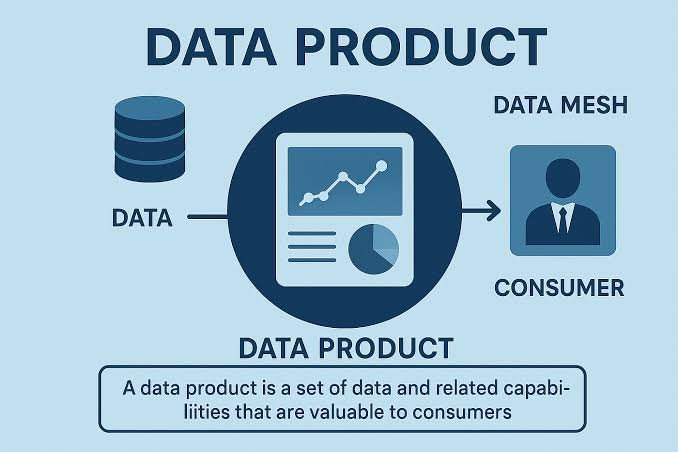
A data product is a well-defined, managed, and reusable data asset designed to solve a specific business problem or support a particular business outcome.
Unlike traditional datasets, which are often created primarily for storage or reporting, data products are developed with their users and intended applications in mind.
They combine reliable data, business context, documentation, governance, accessibility, and ownership into a consumable offering.
In a B2B environment, data products can serve multiple business functions, including:
- Sales teams looking for accurate customer and account intelligence.
- Marketing teams requiring reliable audience segmentation and campaign performance data.
- Finance teams analysing revenue, profitability, and payment behaviour.
- Supply chain teams monitoring inventory, procurement, and supplier performance.
- Leadership teams accessing consistent business performance indicators.
- Customer success teams identifying customer engagement patterns and retention risks.
For example, a B2B manufacturing company might develop a supplier performance data product that combines procurement history, delivery timelines, quality records, and contract information.
Instead of requiring procurement, finance, and operations teams to extract information from separate systems, the organisation provides one governed and reusable source of supplier intelligence.
Data Products vs Traditional Data Assets
Although the terms are sometimes used interchangeably, a traditional data asset and a data product are not necessarily the same.
| Traditional Data Asset | Data Product |
|---|---|
| Primarily stores information | Designed to solve a business problem |
| Often created for a specific team | Built for multiple potential consumers |
| May have limited documentation | Includes clear documentation and context |
| Ownership may be unclear | Has defined ownership and accountability |
| Quality checks may be inconsistent | Includes measurable quality standards |
| Often requires technical intervention | Provides defined access and consumption methods |
| Value is difficult to measure | Has identifiable business outcomes |
The fundamental difference is the product mindset.
A data product is not simply information made available to users. It is information packaged, maintained, governed, and delivered in a way that makes it consistently valuable.
Why B2B Enterprises Need a Data Product Strategy
As B2B organisations scale, the volume and complexity of enterprise information increase. Without a structured approach, data management becomes increasingly difficult.
A data product strategy provides a framework for making information discoverable, trustworthy, accessible, and reusable across the organisation.
Here are some of the key reasons businesses are adopting this approach.
1. Breaking Down Enterprise Data Silos
Data silos are one of the biggest challenges facing large organisations.
Sales, marketing, finance, operations, and customer service departments often maintain separate databases and reporting systems. These systems may contain overlapping information but use different definitions, formats, and update cycles.
For example, sales and finance teams might calculate customer revenue differently. Marketing may maintain a separate account list, while customer success uses another system to track customer relationships.
These inconsistencies create confusion and limit collaboration.
Data products help address this problem by creating governed, reusable information resources that can serve multiple departments.
A shared customer data product, for instance, can establish consistent customer identifiers, account relationships, industry classifications, and other important attributes.
This gives teams a more consistent foundation for their work.
2. Improving Data Accessibility and Reusability
Traditional data workflows frequently require employees to submit requests to technical teams whenever they need information.
This creates dependency, slows down analysis, and increases the workload on data engineering teams.
Well-designed data products reduce these dependencies by providing documented and accessible datasets through standard interfaces, APIs, data marketplaces, or analytics platforms.
Once a product is developed, multiple authorised teams can reuse it without rebuilding the same data pipelines.
This improves efficiency while allowing technical teams to focus on higher-value development activities.
3. Supporting Faster and More Informed Decision-Making
Business decisions are only as reliable as the information supporting them.
When departments work with inconsistent or outdated information, decision-making becomes slower and less effective.
Data products provide trusted information with clear definitions, ownership, and update expectations.
For example, a revenue performance data product can combine sales transactions, customer information, subscription records, and financial metrics.
Business leaders can use this information to understand revenue trends, identify underperforming segments, evaluate customer profitability, and make more informed strategic decisions.
4. Reducing Data Duplication and Operational Costs
When departments independently build similar datasets, organisations end up duplicating engineering effort, storage, maintenance, and validation processes.
A data product approach encourages teams to build reusable data resources rather than repeatedly solving the same information problems.
For example, instead of five departments developing separate customer segmentation pipelines, an enterprise can maintain one governed customer segmentation data product.
This can reduce duplicated work and improve consistency across business functions.
5. Creating Opportunities for Data Monetisation
Enterprise information can create value beyond internal reporting and operational efficiency.
In suitable B2B business models, organisations can develop data products that support customer-facing services, partner ecosystems, industry intelligence, or premium analytics offerings.
For example, a logistics company could provide customers with shipment visibility and delivery performance analytics as part of a digital service offering.
However, external data monetisation requires careful consideration of contractual rights, privacy obligations, intellectual property, security, and applicable regulations.
The objective is not simply to sell information. It is to create a useful, differentiated business offering supported by trusted data.
Key Components of a Successful B2B Data Product
A successful data product requires more than a well-designed database or reporting dashboard.
It needs a combination of technical capabilities, business ownership, governance, and user-focused design.
The following components form the foundation of an effective enterprise data product.
1. Clearly Defined Business Purpose
Every data product should address a specific business need.
Before development begins, organisations should identify:
- Who will use the data product?
- What business problem will it solve?
- Which decisions or processes will it support?
- What information is required?
- How will its value be measured?
For example, a customer profitability data product might be designed to help account managers identify high-value customers and understand the profitability of individual accounts.
Its success could be measured through adoption, reduced reporting effort, and improvements in account planning.
2. High-Quality and Reliable Data
Data quality is fundamental to product reliability.
If information is incomplete, inconsistent, duplicated, or outdated, users will struggle to trust the product.
Important data quality dimensions include:
- Accuracy: Does the information correctly represent real-world conditions?
- Completeness: Are the necessary fields and records available?
- Consistency: Do definitions and values remain consistent across systems?
- Timeliness: Is the information updated according to business requirements?
- Uniqueness: Are duplicate records identified and managed?
- Validity: Does the information follow defined formats and business rules?
Organisations should establish data quality expectations and monitor them continuously.
3. Defined Data Ownership and Accountability
Every data product should have a clearly identified owner.
The owner is responsible for ensuring that the product continues to meet business requirements, maintains its quality standards, and evolves as user needs change.
A typical ownership structure includes:
- Data Product Owner: Defines the business purpose, roadmap, and priorities.
- Data Engineer: Builds and maintains data pipelines and transformations.
- Data Architect: Ensures the product fits the organisation’s technical architecture.
- Data Steward: Supports data definitions, quality, and governance.
- Business Consumer: Uses the product and provides feedback.
In smaller organisations, one person may perform multiple responsibilities. The important requirement is that accountability remains clear.
4. Strong Data Governance and Security
Making data reusable does not mean making it universally accessible.
B2B enterprises often manage commercially sensitive information, employee records, customer details, financial data, and contractual information.
A successful data product must include appropriate safeguards.
These may include:
- Role-based access control.
- Data classification and sensitivity labels.
- Encryption in transit and at rest.
- Data lineage and audit trails.
- Consent and purpose-based usage controls where applicable.
- Retention and deletion policies.
- Regulatory and contractual compliance checks.
Governance should be built into the product lifecycle rather than added as an afterthought.
5. Discoverability and Ease of Consumption
A data product creates limited value if users cannot find or understand it.
Organisations should maintain clear documentation covering:
- Product purpose and business use cases.
- Data definitions and field descriptions.
- Data sources and lineage.
- Refresh frequency.
- Quality expectations.
- Access requirements.
- Usage limitations.
- Product owner and support contacts.
A central data catalogue or data marketplace can make these products easier to discover and consume.
6. Continuous Monitoring and Maintenance
Like any other business product, a data product requires ongoing management.
Enterprise systems change, business requirements evolve, and source data may become unreliable.
Monitoring should cover data quality, availability, freshness, pipeline performance, access patterns, and user adoption.
A product should also have a defined process for managing incidents, communicating changes, and retiring outdated versions.
Types of Data Products Used in B2B Organisations
Data products can support different business functions depending on the organisation’s industry, operating model, and data maturity.
Below are some common examples.
1. Customer 360 Data Products
<This section>Customer 360 data products consolidate customer information from multiple systems to provide a unified view of each account.
They may combine:
- CRM records.
- Purchase and transaction history.
- Customer support interactions.
- Contract and subscription information.
- Marketing engagement.
- Account ownership and relationship details.
Sales, marketing, and customer success teams can use this information to understand customer relationships, identify opportunities, and improve account management.
2. Sales and Revenue Intelligence Products
These products combine sales pipeline information, historical transactions, account data, and revenue performance indicators.
Common applications include:
- Sales forecasting.
- Pipeline analysis.
- Customer acquisition analysis.
- Revenue trend monitoring.
- Territory performance.
- Cross-selling and upselling opportunities.
They help sales leaders and executives make decisions using consistent commercial information.
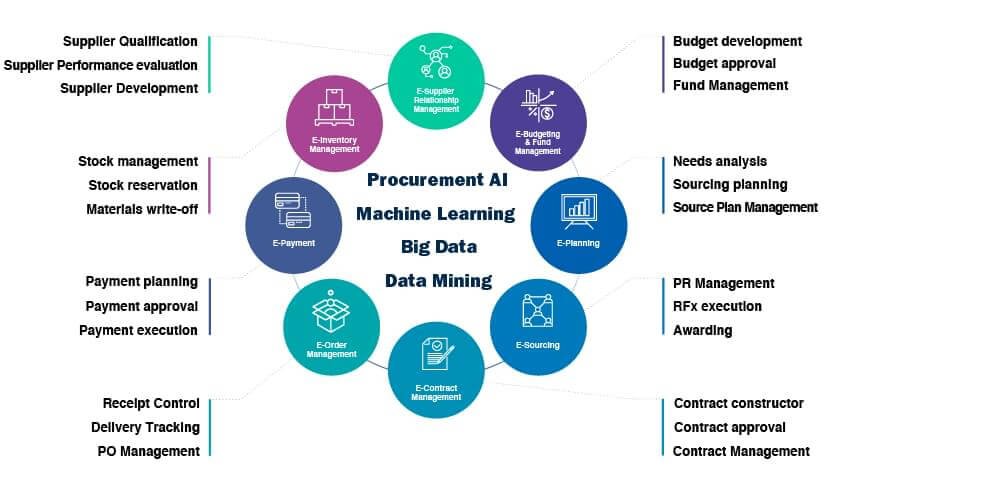
3. Supply Chain and Procurement Data Products
Supply chain data products combine information about suppliers, inventory, orders, shipments, and delivery performance.
They can help businesses:
- Monitor supplier reliability.
- Identify procurement inefficiencies.
- Track inventory availability.
- Analyse delivery performance.
- Understand supply chain disruptions.
- Improve purchasing decisions.
For manufacturing and distribution businesses, these products can support better operational visibility.
4. Financial and Risk Data Products
Financial data products provide structured information for financial analysis, reporting, and risk management.
Examples include:
- Customer profitability datasets.
- Accounts receivable performance.
- Credit risk indicators.
- Revenue recognition information.
- Expense analysis.
- Financial forecasting inputs.
Such products should include appropriate financial controls, access restrictions, and validation processes.
5. Market and Industry Intelligence Products
B2B organisations can also develop products that combine internal business information with appropriately licensed external datasets.
These products may support:
- Market opportunity assessment.
- Industry benchmarking.
- Geographic expansion.
- Competitive analysis.
- Customer segmentation.
- Demand forecasting.
The ability to combine internal and external information can help organisations identify opportunities that are difficult to recognise through isolated datasets.
How to Build a Data Product Strategy in B2B
Developing successful data products requires a structured approach that connects business priorities with technical execution.
The following steps provide a practical framework for enterprises.
Step 1: Identify High-Value Business Use Cases
Start with business problems rather than available technology.
Identify recurring information challenges that affect multiple departments or influence important business decisions.
Examples include inconsistent customer information, slow sales reporting, fragmented supplier records, and limited visibility into customer profitability.
Prioritise opportunities based on:
- Business impact.
- Number of potential users.
- Availability of source data.
- Implementation complexity.
- Reusability across departments.
- Governance and compliance requirements.
A focused use case provides a clear starting point and makes it easier to demonstrate value.
Step 2: Assess Existing Enterprise Data
Before creating a new data product, understand what information already exists.
Conduct a data assessment covering:
- Source systems.
- Data availability.
- Existing data pipelines.
- Data quality.
- Duplicate records.
- Business definitions.
- Access restrictions.
- Data ownership.
This helps organisations identify reusable information and avoid unnecessary development.
Step 3: Define the Data Product’s Contract
A data product should have a clearly documented interface and expectations.
This is often described as a data product contract.
The contract defines what consumers can expect from the product, including:
- Data schema and definitions.
- Access methods.
- Update frequency.
- Quality expectations.
- Availability commitments.
- Versioning approach.
- Security requirements.
- Ownership and support arrangements.
A well-defined contract reduces ambiguity between producers and consumers.
It also helps prevent unexpected changes from disrupting downstream business processes.
Step 4: Design the Technical Architecture
The technical architecture should support reliable data integration, processing, storage, access, and monitoring.
Depending on the organisation’s needs, this may involve:
- Cloud data warehouses.
- Data lakes and lakehouse platforms.
- ETL and ELT pipelines.
- APIs.
- Streaming data infrastructure.
- Data catalogues.
- Data quality tools.
- Identity and access management systems.
The architecture should be selected based on business requirements, existing infrastructure, scalability, security, and operating costs.
The objective is not to introduce the most complex technology. It is to create a dependable foundation for reusable data delivery.
Step 5: Implement Governance and Security Controls
Governance should be incorporated throughout the development process.
Establish ownership, classification, access policies, quality rules, lineage tracking, and compliance requirements.
Where data is shared across departments or external partners, organisations should clearly define permitted purposes and usage conditions.
This helps build confidence among data producers, consumers, and business stakeholders.
Step 6: Launch an Initial Data Product
Rather than transforming the entire enterprise data environment at once, start with a manageable product that addresses a clearly defined problem.
For example, an organisation might begin with a customer master data product that provides consistent customer identifiers and account attributes to sales and finance.
Test the product with a small group of business users.
Gather feedback on usability, data quality, accessibility, and business relevance.
Use those findings to improve the product before expanding its adoption.
Step 7: Measure Performance and Scale
Once the initial product demonstrates value, establish a repeatable approach for developing additional data products.
Create common standards for:
- Product documentation.
- Data quality.
- Governance.
- Security.
- Ownership.
- Monitoring.
- Version management.
- User support.
This allows organisations to scale their data product ecosystem without introducing inconsistent practices.
Data Mesh and Data Products: Understanding the Relationship
Data mesh is an architectural and organisational approach that promotes domain-oriented data ownership, data as a product, self-service data infrastructure, and federated computational governance.
Data products are central to this approach.
In a traditional centralised data model, a central data team often manages most enterprise data pipelines and fulfils requests from different departments.
As organisations grow, this model can create bottlenecks because the central team must understand and support an increasing number of business domains.
Data mesh encourages individual business domains to take responsibility for their data while following shared enterprise standards.
For example:
- The sales domain manages sales performance data products.
- The finance domain manages financial reporting data products.
- The supply chain domain manages procurement and logistics data products.
- The customer success domain manages customer engagement data products.
Each domain understands its information and business context, while shared governance ensures interoperability, security, and consistency.
It is important to understand that adopting data products does not automatically require implementing a full data mesh architecture.
Organisations can successfully develop data products within centralised, hybrid, or decentralised data environments.
The right approach depends on business complexity, organisational maturity, technology capabilities, and governance requirements.
The Role of AI and Automation in Data Products
Artificial intelligence and automation are creating new opportunities to improve how enterprises build, manage, and consume data products.
However, AI systems are only as dependable as the information and controls supporting them.
High-quality data products can provide a structured foundation for enterprise AI applications.
Here are some important use cases.
1. Predictive Analytics
Data products containing historical sales, customer, and operational information can support predictive models.
Businesses can use these models to estimate demand, forecast revenue, identify potential customer churn, and anticipate operational challenges.
2. AI-Powered Customer Intelligence
Customer data products can provide structured information for AI applications that support account research, customer segmentation, personalised recommendations, and sales prioritisation.
Appropriate access controls and data usage restrictions remain essential.
3. Automated Data Quality Monitoring
Machine learning and automated validation tools can help identify unusual data patterns, potential anomalies, and inconsistencies.
For example, an automated monitoring system might flag an unexpected change in customer records or a sudden decline in transaction data.
4. Generative AI and Enterprise Knowledge Access
Governed data products can provide trusted information to enterprise AI assistants and retrieval-augmented generation (RAG) systems.
Instead of relying on disconnected documents and inconsistent datasets, AI applications can access structured and documented enterprise information.
This can improve the relevance and reliability of business insights, although outputs still require appropriate evaluation, permissions, and human oversight.
Measuring the Business Value of Data Products
Building data products is an investment. Organisations need measurable indicators to understand whether these investments are producing meaningful business outcomes.
The right metrics should reflect both technical performance and business value.
| Measurement Area | Example KPI | What It Measures |
|---|---|---|
| Adoption | Active users and consuming teams | Product usage |
| Reusability | Number of downstream use cases | Cross-functional value |
| Data quality | Accuracy and completeness scores | Information reliability |
| Freshness | Data update latency | Timeliness |
| Availability | Product uptime | Operational reliability |
| Efficiency | Reduction in reporting preparation time | Productivity improvements |
| Cost optimisation | Reduction in duplicate pipelines | Infrastructure and engineering efficiency |
| Business impact | Improved conversion or retention | Commercial outcomes |
Organisations should establish baseline measurements before launching a data product.
For example, if a finance team previously spent several hours each week reconciling customer revenue information, the business can measure whether a shared revenue data product reduces that effort.
Similarly, if multiple departments maintain separate customer records, the organisation can monitor the reduction in duplicated datasets after introducing a governed customer data product.
The most meaningful measurement approach connects technical performance to actual business outcomes.
Common Challenges in Implementing B2B Data Products
Despite their potential benefits, data product initiatives can encounter several challenges.
Understanding these obstacles early can help organisations develop more sustainable strategies.
1. Lack of Clear Business Ownership
Without an accountable owner, data products may become technical deliverables without a clear business purpose.
Solution: Assign a product owner who understands the intended users, business requirements, product roadmap, and performance expectations.
2. Poor Data Quality
Inconsistent source systems can undermine the reliability of a data product.
Solution: Introduce data profiling, validation rules, quality monitoring, and clear remediation processes before scaling consumption.
3. Legacy Technology Infrastructure
Many enterprises operate with older systems that were not designed for modern data sharing or integration.
Solution: Adopt an incremental modernisation strategy. Prioritise integration and interoperability rather than attempting to replace every legacy system immediately.
4. Organisational Resistance
Teams may be reluctant to share information because of ownership concerns, security risks, or established working practices.
Solution: Establish clear data-sharing policies, demonstrate the benefits of reuse, and involve business stakeholders in product development.
5. Overengineering
Organisations sometimes invest heavily in complex architectures before validating whether business users need the proposed product.
Solution: Start with a focused use case, validate adoption, and expand capabilities based on demonstrated requirements.
6. Insufficient Product Maintenance
A data product can lose value when its source systems, definitions, and business requirements change.
Solution: Treat data products as continuously managed products with defined service expectations, monitoring, versioning, and lifecycle ownership.
Real-World B2B Data Product Examples
To understand the practical value of data products, consider how different enterprise scenarios can be addressed.
The following examples are illustrative scenarios rather than claims about specific organisations.
Example 1: Manufacturing Enterprise
A manufacturing business operates separate systems for production, procurement, inventory, and supplier management.
Procurement teams struggle to understand supplier performance because information is distributed across multiple platforms.
The organisation develops a supplier performance data product that combines:
- Supplier information.
- Purchase order history.
- Delivery performance.
- Product quality records.
- Procurement costs.
The resulting product provides a consistent supplier performance view for procurement, finance, and operations teams.
This can support supplier evaluation, purchasing decisions, and operational planning.
Example 2: B2B SaaS Company
A software-as-a-service company wants to improve customer retention but has fragmented information across CRM, subscription billing, product analytics, and support platforms.
It develops a customer health data product that combines account activity, subscription status, product usage, and customer support indicators.
Customer success teams can use the product to identify accounts that may need additional attention.
Sales teams can also use the information to understand account engagement and renewal opportunities.
Example 3: Logistics and Supply Chain Business
A logistics provider wants to improve shipment visibility for enterprise customers.
It develops a shipment intelligence data product that combines tracking events, delivery records, route information, and exception data.
The product can support internal operational dashboards and customer-facing shipment visibility services.
This demonstrates how an internal enterprise data asset can also become the foundation for a differentiated B2B offering.
Best Practices for Building Scalable Enterprise Data Products
Organisations looking to establish a mature data product ecosystem should consider the following practices:
- Start with business outcomes: Build products around clearly identified business needs rather than creating datasets without defined consumers.
- Adopt a product mindset: Treat data products as continuously managed offerings with users, ownership, roadmaps, and measurable performance.
- Standardise data definitions: Establish common business terminology and metrics to reduce inconsistencies across departments.
- Prioritise interoperability: Use documented interfaces, consistent identifiers, and agreed data contracts to support integration.
- Embed governance from the beginning: Make security, privacy, compliance, and data quality part of the product design.
- Encourage cross-functional collaboration: Involve business users, data engineers, architects, and governance teams throughout the lifecycle.
- Make products easy to discover: Maintain a searchable data catalogue with clear descriptions, ownership, and access instructions.
- Monitor adoption and performance: Track technical reliability alongside usage and business impact.
- Design for reuse: Avoid unnecessary customisation that limits the product to a single department or use case.
- Improve continuously: Use feedback, usage patterns, and changing business requirements to refine the product.
The Future of Data Products in B2B
The role of enterprise data is evolving.
As organisations adopt cloud platforms, AI-driven workflows, advanced analytics, and connected business ecosystems, the ability to access reliable information will become increasingly important.
Data products are positioned to support this evolution by providing structured, governed, and reusable information that can serve both human users and automated applications.
Several developments are likely to influence their adoption:
- AI-ready enterprise data: Organisations will increasingly focus on preparing trusted, documented information for AI applications.
- Self-service data consumption: Business users will expect easier access to approved information without depending on technical teams for every request.
- Data marketplaces: Internal and external data marketplaces may make enterprise information easier to discover, share, and consume.
- Greater interoperability: Standardised interfaces and data contracts will help connect products across departments and business ecosystems.
- Outcome-driven data management: Organisations will increasingly evaluate data products based on measurable business value rather than the volume of information they store.
The organisations that succeed will be those that combine technology investment with strong ownership, governance, and a clear understanding of business needs.
Conclusion: Turning Enterprise Information Into Long-Term Business Value
Enterprise information is one of the most important resources available to modern B2B organisations. However, simply collecting and storing data does not guarantee business value.
The real opportunity lies in making information accessible, trustworthy, reusable, and aligned with business objectives.
Data products in B2B provide a practical way to achieve this transformation. By treating enterprise information as a managed business product, organisations can reduce data silos, improve operational efficiency, strengthen decision-making, and create new opportunities for innovation.
Whether an organisation is building a customer intelligence platform, a supplier performance solution, or an AI-ready enterprise data ecosystem, the underlying principle remains the same: data should be designed around the people and processes that depend on it.
The future of enterprise data management is not simply about having more information. It is about making existing information work harder, across more teams, and for more business outcomes.
Frequently Asked Questions (FAQs)
1. What are data products in B2B?
Data products in B2B are structured, governed, and reusable data assets designed to address specific business needs. They enable organisations to provide reliable enterprise information to multiple departments, business users, applications, and authorised external consumers.
2. How are data products different from traditional datasets?
Traditional datasets primarily store or organise information. Data products go further by including defined business purposes, ownership, documentation, quality standards, governance, access methods, and ongoing maintenance.
3. What are some examples of B2B data products?
Common examples include customer 360 platforms, sales intelligence datasets, supplier performance products, financial reporting datasets, market intelligence solutions, and customer health data products.
4. How do data products improve business efficiency?
They reduce duplicated data preparation, minimise inconsistencies across departments, improve information accessibility, and allow multiple teams to reuse trusted datasets rather than creating separate solutions.
5. What is the relationship between data mesh and data products?
Data mesh is an organisational and architectural approach that promotes domain-oriented data ownership and treats data as a product. Data products are a core element of this approach, although organisations can implement them without adopting a full data mesh architecture.
6. How do organisations ensure data product quality?
Organisations can maintain data quality through validation rules, automated monitoring, defined quality metrics, data lineage, ownership, and regular reviews of source systems and business definitions.
7. Can B2B companies monetise their data products?
Yes. Depending on their business model and legal rights, B2B organisations can develop data-driven services, industry intelligence offerings, customer analytics, and partner-facing information products. Privacy, contractual restrictions, licensing, and regulatory requirements must be considered.
8. How does AI benefit from enterprise data products?
AI applications can use governed, documented, and reliable data products as information sources for predictive analytics, customer intelligence, automated reporting, and enterprise knowledge assistants. Data quality and appropriate access controls remain essential.
9. What technologies are used to build data products?
Common technologies include cloud data warehouses, data lakes, lakehouse platforms, ETL and ELT tools, APIs, data catalogues, data quality platforms, streaming infrastructure, and identity management solutions.
10. How should a business get started with data products?
Start by identifying a high-value business problem, assessing existing data sources, defining the intended consumers, assigning ownership, establishing quality and governance requirements, and developing a focused initial product. Measure adoption and business outcomes before scaling.