Introduction
As enterprises navigate economic uncertainty, digital transformation, and increasingly complex supply chains, optimizing vendor relationships has become more important than ever. Organizations often work with hundreds—or even thousands—of suppliers across departments, locations, and business functions. While a large vendor network can offer flexibility and access to specialized expertise, it also introduces operational complexity, higher costs, inconsistent service quality, and greater compliance risks.
To address these challenges, many businesses are embracing vendor consolidation as a strategic initiative. Rather than maintaining an extensive list of suppliers, enterprises are reducing their vendor base and building deeper partnerships with a smaller number of trusted, high-performing vendors. This approach enables organizations to simplify procurement, improve operational efficiency, strengthen supplier relationships, and gain greater control over spending.
Vendor consolidation is no longer viewed as merely a procurement exercise. It has evolved into an enterprise-wide strategy that supports cost optimization, digital transformation, supply chain resilience, and long-term business growth.
In this article, we’ll explore why vendor consolidation is becoming a key enterprise strategy, the benefits it delivers, implementation best practices, potential challenges, and the future of supplier management.
What Is Vendor Consolidation?
Vendor consolidation is the process of reducing the number of suppliers an organization works with by centralizing purchases, services, or contracts with fewer, strategically selected vendors.
Instead of sourcing similar products or services from multiple providers, businesses evaluate supplier performance and consolidate spending with vendors that consistently deliver the best value.
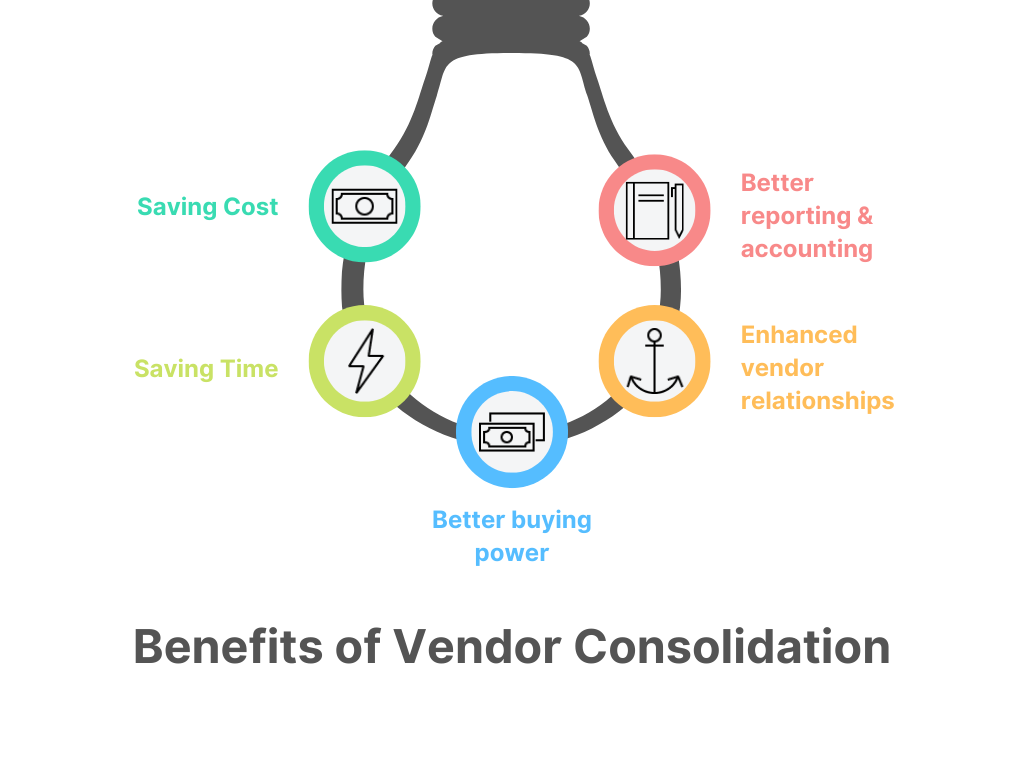
The primary goals of vendor consolidation include:
- Reducing procurement complexity
- Lowering operational costs
- Improving supplier relationships
- Increasing purchasing power
- Enhancing compliance
- Improving service quality
- Streamlining procurement processes
Why Enterprises Are Prioritizing Vendor Consolidation
Modern enterprises face numerous challenges when managing large supplier networks, including rising procurement costs, fragmented spending, duplicate contracts, and increased administrative workloads.
Key factors driving vendor consolidation include:
- Economic pressure to reduce costs
- Increasing supplier management complexity
- Digital transformation initiatives
- Greater focus on supply chain resilience
- Growing regulatory requirements
- Demand for procurement automation
- Improved visibility into enterprise spending
By consolidating vendors, organizations can address these challenges while creating a more agile and efficient procurement ecosystem.
Key Benefits of Vendor Consolidation
1. Significant Cost Savings
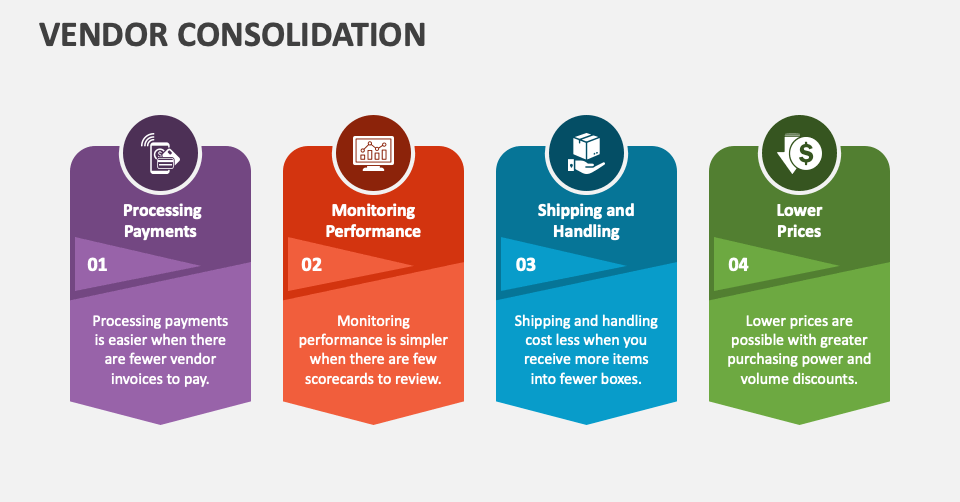
One of the most compelling reasons for vendor consolidation is cost reduction.
Consolidating purchases with fewer suppliers enables organizations to negotiate:
- Volume discounts
- Better pricing
- Reduced shipping costs
- Improved payment terms
- Lower administrative expenses
Centralized purchasing also reduces duplicate spending across departments.
2. Improved Procurement Efficiency
Managing fewer vendors simplifies procurement operations.
Procurement teams spend less time on:
- Supplier onboarding
- Purchase order processing
- Invoice management
- Contract administration
- Vendor communication
This allows procurement professionals to focus on strategic initiatives rather than administrative tasks.
3. Stronger Supplier Relationships
Strategic partnerships often produce better outcomes than transactional relationships.
Working closely with fewer vendors encourages:
- Better collaboration
- Improved service quality
- Faster issue resolution
- Joint innovation
- Greater responsiveness
Preferred suppliers are more likely to prioritize enterprise customers with whom they have long-term relationships.
4. Better Spend Visibility
Consolidated vendor data provides a clearer picture of organizational spending.
Businesses gain valuable insights into:
- Category spending
- Supplier performance
- Budget utilization
- Cost-saving opportunities
- Purchasing trends
These insights support better financial planning and procurement decisions.
5. Simplified Contract Management
Managing hundreds of supplier contracts can be resource-intensive.
Vendor consolidation reduces the number of agreements requiring oversight, making it easier to:
- Monitor contract compliance
- Track renewal dates
- Standardize contract terms
- Reduce legal complexity
Centralized contract management also minimizes the risk of duplicate agreements and missed obligations.
6. Enhanced Compliance and Governance
Enterprises face increasing regulatory and governance requirements.
With fewer suppliers, organizations can more effectively:
- Conduct due diligence
- Monitor regulatory compliance
- Assess cybersecurity standards
- Evaluate ESG performance
- Enforce procurement policies
This reduces operational and reputational risks.
7. Increased Operational Agility
Simplified supplier networks improve organizational responsiveness.
Businesses can:
- Accelerate purchasing decisions
- Standardize workflows
- Improve cross-functional collaboration
- Reduce procurement bottlenecks
This agility becomes especially valuable during periods of market disruption or rapid growth.
The Role of Technology in Vendor Consolidation
Modern procurement technologies are making vendor consolidation easier and more effective.
Organizations increasingly use digital platforms for:
- Supplier lifecycle management
- Contract management
- Spend analytics
- Procurement automation
- Risk assessment
- Performance monitoring
Artificial intelligence and machine learning further enhance decision-making by identifying consolidation opportunities, forecasting demand, and evaluating supplier performance.
Common Enterprise Use Cases
Information Technology
Many enterprises consolidate vendors for:
- Cloud services
- Software licenses
- Hardware procurement
- Cybersecurity solutions
- IT support services
This reduces technology sprawl and simplifies vendor management.
Manufacturing
Manufacturers streamline supplier networks for:
- Raw materials
- Components
- Packaging
- Logistics
- Equipment maintenance
Consolidation improves production planning and inventory management.
Healthcare
Healthcare organizations consolidate vendors supplying:
- Medical equipment
- Pharmaceuticals
- Laboratory services
- Facility management
- Technology solutions
This supports regulatory compliance while improving procurement efficiency.
Financial Services
Banks and financial institutions consolidate suppliers for:
- IT infrastructure
- Compliance services
- Data providers
- Payment technologies
- Consulting services
Vendor consolidation strengthens governance and operational consistency.
Challenges of Vendor Consolidation
Despite its advantages, vendor consolidation requires careful planning.
Supplier Dependency
Reducing the number of vendors may increase reliance on key suppliers.
Organizations should mitigate this risk by:
- Maintaining backup suppliers
- Conducting regular risk assessments
- Developing business continuity plans
Organizational Resistance
Departments accustomed to existing vendors may resist change.
Successful implementation requires:
- Executive sponsorship
- Clear communication
- Stakeholder engagement
- Employee training
Transition Costs
Switching vendors may involve:
- Data migration
- System integration
- Contract termination fees
- Staff training
Businesses should evaluate both short-term investments and long-term returns.
Best Practices for Successful Vendor Consolidation
Organizations can maximize success by following these best practices:
Conduct Comprehensive Spend Analysis
Review procurement data to identify duplicate suppliers, spending patterns, and consolidation opportunities.
Evaluate Supplier Performance
Assess vendors based on:
- Cost competitiveness
- Product quality
- Delivery reliability
- Innovation
- Financial stability
- Customer service
Prioritize Strategic Partnerships
Select suppliers capable of supporting long-term business objectives rather than focusing solely on price.
Standardize Procurement Policies
Create consistent procurement processes across departments to prevent supplier proliferation.
Leverage Procurement Technology
Use digital procurement platforms to automate workflows, monitor supplier performance, and improve spend visibility.
Continuously Monitor Supplier Performance
Vendor consolidation is an ongoing process.
Regularly review:
- Service levels
- Delivery performance
- Compliance
- Customer satisfaction
- Cost savings
Continuous improvement ensures sustained value.
Future Trends Driving Vendor Consolidation
Several emerging trends are accelerating enterprise adoption.
Artificial Intelligence
AI-powered procurement tools provide predictive insights, automate supplier evaluation, and optimize sourcing decisions.
ESG-Focused Procurement
Enterprises increasingly evaluate vendors based on environmental, social, and governance performance alongside cost and quality.
Supply Chain Resilience
Organizations are balancing consolidation with resilience by maintaining strategic backup suppliers and diversifying critical supply sources.
Data-Driven Procurement
Advanced analytics enable procurement teams to make faster, more informed supplier decisions.
Integrated Supplier Ecosystems
Long-term collaboration between enterprises and strategic suppliers fosters innovation, operational efficiency, and shared business growth.
Why Vendor Consolidation Is a Strategic Imperative
Vendor consolidation is no longer simply about reducing supplier numbers—it is about creating a smarter, more resilient, and more efficient enterprise.
Organizations that successfully implement vendor consolidation can achieve:
- Lower procurement costs
- Improved operational efficiency
- Stronger supplier partnerships
- Better compliance and governance
- Enhanced spend visibility
- Faster procurement cycles
- Reduced business risk
- Greater scalability and agility
These benefits make vendor consolidation a critical component of modern enterprise strategy.
Conclusion
As enterprises continue to navigate economic pressures, evolving customer expectations, and increasingly complex supply chains, vendor consolidation has emerged as a strategic priority rather than a tactical procurement initiative.
By reducing supplier complexity and strengthening relationships with high-performing vendors, organizations can streamline operations, improve financial performance, enhance compliance, and build a more resilient supply chain. When supported by modern procurement technologies and data-driven decision-making, vendor consolidation becomes a powerful driver of efficiency, innovation, and sustainable growth.
The most successful enterprises recognize that effective supplier management is not about working with the largest number of vendors—it is about partnering with the right ones. By making vendor consolidation a core enterprise strategy, businesses can position themselves for long-term success in an increasingly competitive and dynamic marketplace.