Introduction
As organizations increasingly rely on data-driven decision-making, businesses are searching for ways to collaborate without compromising customer privacy or exposing sensitive information. Traditional methods of data sharing often involve transferring raw datasets between partners, creating significant risks related to data breaches, regulatory compliance, and customer trust.
This is where Data Clean Rooms have emerged as a transformative solution. They provide organizations with a secure environment where multiple parties can analyze and compare datasets without revealing the underlying raw data. By enabling privacy-preserving collaboration, data clean rooms have become an essential technology for B2B partnerships across industries including retail, healthcare, finance, media, advertising, manufacturing, and telecommunications.
As privacy regulations become stricter and third-party cookies continue to disappear, businesses need new methods to unlock valuable insights while maintaining compliance. Data clean rooms offer a practical solution by allowing companies to collaborate responsibly and confidently.
In this comprehensive guide, we’ll explore the role of data clean rooms in B2B collaboration, how they work, their benefits, industry use cases, challenges, and why they are becoming the future of privacy-first data sharing.
What Is a Data Clean Room?
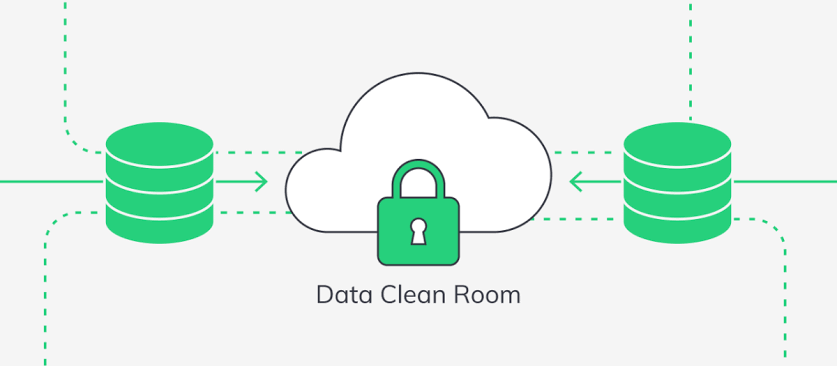
A Data Clean Room (DCR) is a secure and controlled environment where two or more organizations can combine, analyze, and generate insights from their data without directly sharing personally identifiable information (PII) or proprietary datasets.
Instead of exchanging customer records, each participant uploads encrypted or anonymized data into the clean room. Advanced privacy technologies ensure that only approved queries and aggregated insights can be accessed.
The result is collaborative analytics without exposing confidential business information.
Key Characteristics
- Secure data environment
- Privacy-preserving analytics
- Controlled access permissions
- Encryption of sensitive information
- Data anonymization
- Aggregated reporting
- Regulatory compliance
- No exposure of raw customer data
Why B2B Data Collaboration Matters
Modern businesses rarely operate in isolation.
Manufacturers work with suppliers.
Retailers collaborate with brands.
Publishers partner with advertisers.
Healthcare organizations coordinate with insurers.
Banks collaborate with fintech companies.
Every partnership benefits from better data.
However, data privacy laws make unrestricted data sharing increasingly difficult.
Businesses need answers to questions like:
- Which customers overlap?
- Which campaigns generated conversions?
- Which products perform across channels?
- What customer segments are most valuable?
- Which marketing investments deliver the highest ROI?
Without secure collaboration tools, answering these questions becomes extremely challenging.
This is where data clean rooms become essential.
How Data Clean Rooms Work
Although implementations vary, most data clean rooms follow a similar workflow.
Step 1: Data Preparation
Each organization prepares its first-party customer data.
This may include:
- Customer IDs
- Purchase history
- CRM records
- Website interactions
- Loyalty program data
- Marketing engagement
- Sales transactions
Sensitive information is encrypted or hashed before upload.
Step 2: Secure Data Upload
Each partner uploads data into the clean room.
The platform ensures:
- Encryption
- Access control
- Authentication
- Data governance
Neither organization can directly view the other’s raw data.
Step 3: Identity Matching
The clean room securely matches customer identities using privacy-safe identifiers.
Matching methods include:
- Hashed email addresses
- Customer IDs
- Device IDs
- Secure identity graphs
Step 4: Query Execution
Authorized users run approved analytical queries.
For example:
- Customer overlap analysis
- Campaign measurement
- Attribution modeling
- Audience segmentation
- Sales lift analysis
Only aggregated results are returned.
Step 5: Privacy Protection
Privacy controls prevent users from:
- Downloading raw datasets
- Viewing individual records
- Identifying customers
- Reverse engineering data
Why Data Privacy Has Become a Business Priority
Growing consumer awareness and stricter regulations have fundamentally changed how organizations manage customer data.
Major regulations include:
- GDPR
- CCPA
- CPRA
- HIPAA
- LGPD
- India’s Digital Personal Data Protection (DPDP) Act
Organizations that mishandle personal information risk:
- Regulatory penalties
- Financial losses
- Brand damage
- Customer distrust
Data clean rooms significantly reduce these risks.

Benefits of Data Clean Rooms in B2B Collaboration
1. Enhanced Privacy Protection
The biggest advantage is privacy.
Businesses never exchange raw customer information.
Instead, they collaborate through encrypted datasets and aggregated outputs.
This dramatically reduces exposure.
2. Regulatory Compliance
Compliance teams increasingly favor clean room architectures because they minimize unnecessary data sharing.
Organizations can demonstrate responsible data handling while meeting legal obligations.
3. Secure Cross-Company Analytics
Businesses gain valuable insights from shared analysis rather than shared data.
Examples include:
- Shared customer trends
- Market behavior
- Campaign effectiveness
- Geographic performance
4. Improved Marketing Measurement
Advertisers and publishers can accurately measure:
- Reach
- Frequency
- Conversions
- Incrementality
- Attribution
without exposing customer identities.
5. Better Audience Insights
Brands understand overlapping audiences across multiple partners.
This improves:
- Personalization
- Customer segmentation
- Product recommendations
- Campaign targeting
6. Increased Customer Trust
Customers expect companies to protect their information.
Using privacy-first collaboration strengthens:
- Brand reputation
- Customer confidence
- Long-term loyalty
7. Reduced Data Duplication
Organizations avoid creating unnecessary copies of sensitive information.
Less duplication means:
- Lower storage costs
- Reduced security risks
- Easier governance
Common Use Cases
Retail and Consumer Goods
Retailers collaborate with manufacturers to understand:
- Purchase behavior
- Product demand
- Regional sales
- Promotional effectiveness
Neither party shares complete customer records.
Digital Advertising
Advertisers compare campaign performance with publishers.
Key insights include:
- Ad exposure
- Customer conversions
- Audience overlap
- Incremental sales
Healthcare
Hospitals and research organizations analyze patient outcomes while protecting sensitive medical records.
Financial Services
Banks collaborate with fintech providers to improve fraud detection and customer insights without exposing financial information.
Telecommunications
Telecom providers analyze customer mobility patterns with partners while preserving subscriber privacy.
Manufacturing
Manufacturers collaborate with distributors to optimize:
- Inventory planning
- Sales forecasting
- Customer demand
Data Clean Rooms vs Traditional Data Sharing
| Traditional Data Sharing | Data Clean Rooms |
|---|---|
| Raw data exchanged | Raw data protected |
| High security risk | Strong privacy |
| Compliance challenges | Compliance-friendly |
| Multiple copies created | Centralized secure environment |
| Customer exposure possible | Individual identities protected |
| Difficult governance | Strong access control |
Technologies Behind Data Clean Rooms
Several advanced technologies make clean rooms possible.
Encryption
Sensitive information remains encrypted throughout processing.
Hashing
Personal identifiers become irreversible cryptographic values.
Differential Privacy
Random statistical noise protects individual identities while preserving overall trends.
Secure Multi-Party Computation
Multiple organizations jointly compute results without exposing their data.
Access Controls
Role-based permissions ensure only authorized personnel can run approved queries.
Audit Logging
Every interaction is recorded for governance and compliance purposes.
Challenges of Data Clean Rooms
Although powerful, data clean rooms are not without challenges.
Data Standardization
Partners often maintain data in different formats.
Normalization requires time and planning.
Identity Resolution
Matching customers across organizations can be difficult if identifiers differ.
Technical Complexity
Successful deployment requires:
- Data engineers
- Privacy specialists
- Security teams
- Governance frameworks
Cost
Enterprise-grade clean room platforms require investment in:
- Infrastructure
- Licensing
- Integration
- Ongoing management
Organizational Alignment
Successful collaboration depends on trust between partners and clearly defined governance policies.
Best Practices for Successful Data Clean Room Implementation
Organizations should follow these best practices:
Define Clear Business Objectives
Identify the specific questions the collaboration should answer.
Establish Data Governance Policies
Define:
- Access permissions
- Retention periods
- Compliance requirements
- Audit procedures
Use High-Quality First-Party Data
Clean, accurate data produces more reliable insights.
Limit Access
Apply the principle of least privilege.
Only authorized users should access analytical functions.
Monitor Compliance
Regularly audit:
- User activity
- Data usage
- Query history
- Security controls
Train Stakeholders
Marketing, analytics, legal, and IT teams should understand privacy requirements and clean room capabilities.
The Future of Data Clean Rooms
The importance of data clean rooms will continue growing as businesses adapt to a privacy-first digital ecosystem.
Several trends are accelerating adoption:
Cookie Deprecation
As third-party cookies disappear, organizations increasingly rely on first-party data collaboration.
AI-Powered Analytics
Artificial intelligence will help generate deeper insights while maintaining privacy protections.
Industry Collaboration
Entire business ecosystems will collaborate using standardized clean room frameworks.
Stronger Privacy Regulations
Global privacy laws will continue encouraging secure data collaboration methods.
Cloud-Native Growth
Cloud platforms are making clean room technology more scalable and accessible for organizations of all sizes.
Why Businesses Should Invest in Data Clean Rooms
Organizations that embrace privacy-first collaboration gain several strategic advantages:
- Stronger business partnerships
- Better marketing measurement
- Improved customer intelligence
- Enhanced regulatory compliance
- Reduced security risks
- Increased customer trust
- Better ROI from first-party data
As data becomes a competitive advantage, organizations need secure ways to maximize its value.
Data clean rooms make this possible.
Conclusion
Data clean rooms represent a significant shift in how organizations collaborate in the digital age. Rather than exchanging sensitive customer information, businesses can securely analyze shared datasets while maintaining privacy, protecting intellectual property, and complying with evolving regulations.
For B2B organizations, the value extends beyond compliance. Data clean rooms enable deeper partnerships, more accurate marketing measurement, richer customer insights, and stronger decision-making—all without sacrificing security or trust.
As privacy expectations continue to rise and first-party data becomes increasingly valuable, data clean rooms will play a central role in enabling responsible innovation. Businesses that invest in privacy-preserving collaboration today will be better equipped to build trusted relationships, unlock new growth opportunities, and remain competitive in a rapidly evolving data landscape.
In a world where data is one of the most valuable business assets, the future belongs to organizations that can collaborate intelligently while safeguarding privacy. Data clean rooms provide the foundation for that future, allowing businesses to transform shared insights into shared success.