For decades, enterprise technology has been built around applications.
Businesses purchased software to manage finance, customer relationships, human resources, supply chains, sales and operations. Each application solved a specific business problem, often becoming an essential part of the organization’s technology landscape.
But as businesses become more digital, simply having the right applications is no longer enough.
The competitive advantage increasingly comes from how well those applications communicate with one another.
A sales platform needs access to customer information. A finance system needs transaction data. An e-commerce platform needs inventory availability. A customer service application needs order history. An analytics platform needs information from across the organization.
When these systems operate in isolation, data becomes trapped in silos and employees are forced to move information manually between applications.
This is where the API-first enterprise comes into focus.
An API-first approach treats application programming interfaces, or APIs, as fundamental building blocks of digital business. Instead of developing software as isolated applications and connecting them later, organizations design systems around reliable interfaces that allow applications, services and data to communicate from the beginning.
The result is more than technical flexibility.
A well-connected enterprise can move faster, automate more processes, respond to customers more effectively and introduce new digital products with less friction.
In an increasingly interconnected economy, that capability can become a genuine competitive advantage.
What Does API-First Really Mean?
API-first is sometimes misunderstood as simply “using APIs.”
Most modern businesses already use APIs in some form. The difference is architectural and strategic.
In an API-first organization, APIs are treated as products rather than afterthoughts.
They are designed deliberately, documented clearly, secured appropriately and built around consistent standards. Internal teams, external partners and approved applications can use these interfaces to interact with business capabilities without needing to understand the underlying implementation.
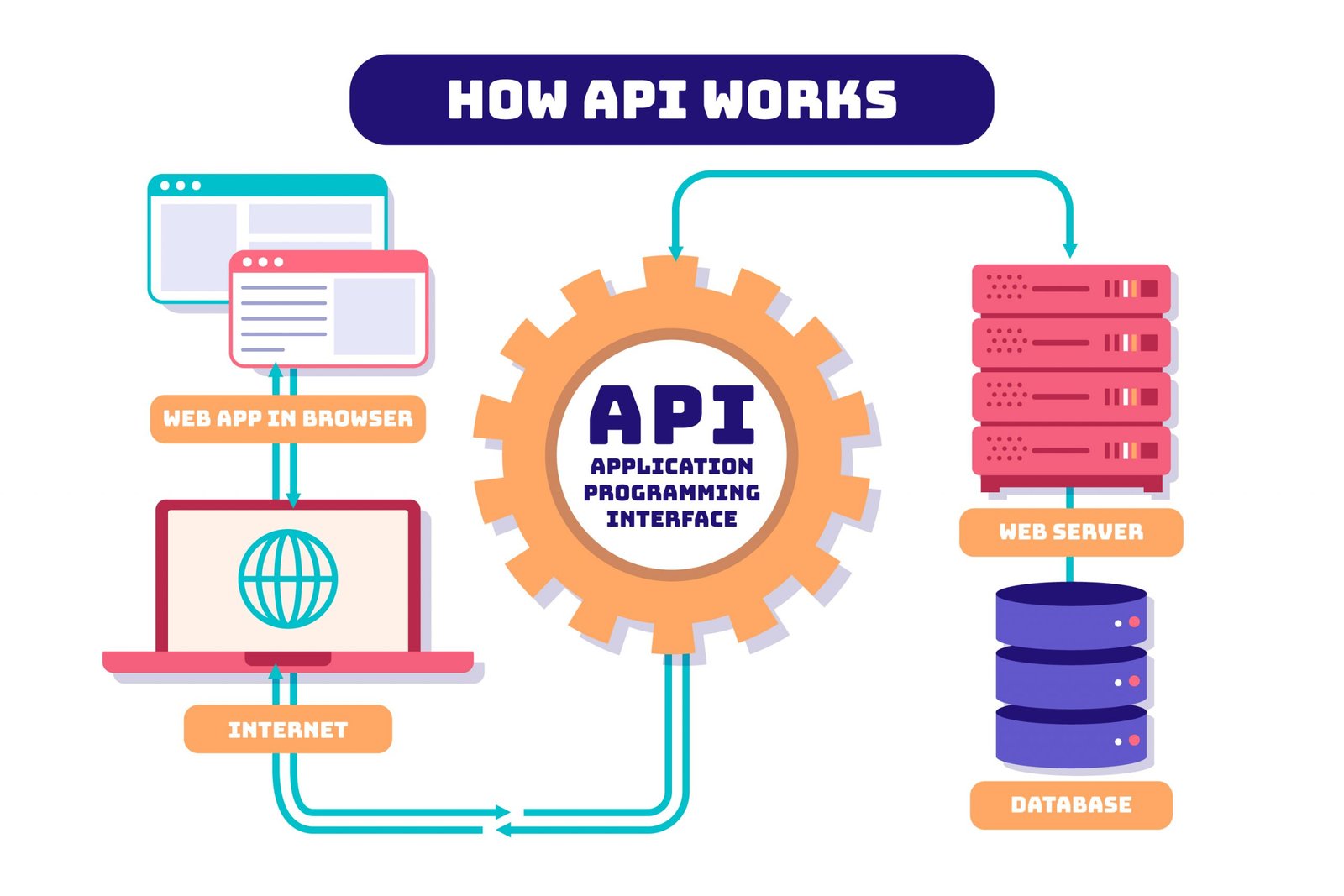
Think of an API as a contract between systems.
One application can request information or initiate an action through a defined interface. The system receiving the request does not need to expose its internal database structure or business logic.
For example, an order management API could allow another application to:
- Create an order
- Check order status
- Retrieve customer information
- Update shipping details
- Cancel an eligible order
The consuming application does not need to know how the order database works. It simply needs to understand the API contract.
This abstraction is powerful because it separates business capabilities from individual applications.
Why Connectivity Is Becoming a Business Issue
For years, integration was primarily treated as an IT concern.
Today, it is increasingly a business concern.
Customers expect seamless digital experiences. Employees expect information to be available wherever they need it. Partners expect systems to exchange data efficiently. Businesses need to respond quickly when markets, regulations or customer expectations change.
Disconnected systems make all of this harder.
Imagine a customer placing an order online.
The e-commerce platform captures the transaction. The inventory system needs to know what was sold. The warehouse needs fulfillment information. The shipping provider needs delivery details. The finance system needs transaction data. The customer service team needs visibility into the order.
If these systems are not connected effectively, every step introduces friction.
Data may be duplicated. Employees may need to enter information manually. Updates may be delayed. Errors may propagate from one system to another.
From the customer’s perspective, the result can be simple: a poor experience.
The technology problem eventually becomes a business problem.
APIs Turn Data Into a Business Capability
One of the biggest advantages of an API-first architecture is that it can transform data and functionality into reusable business capabilities.
Consider customer identity.
Without a reusable identity service, different applications may maintain separate customer records. Sales may have one version of a customer’s information. Support may have another. Billing may have a third.
With a well-designed API, applications can access a shared customer capability.
The same principle applies to payments, pricing, inventory, product information, shipping, authentication and many other business functions.
Once capabilities are exposed through APIs, they can be reused across multiple applications and channels.
That creates leverage.
A company does not need to rebuild the same functionality every time it launches a new application.
Instead, new experiences can connect to existing capabilities.
This can significantly reduce development time and increase consistency across the organization.
Faster Product Development
Speed is one of the most important competitive benefits of API-first architecture.
Traditional enterprise development often involves tightly coupled systems. A change to one application can require changes elsewhere. Developers may need to coordinate with multiple teams before releasing a new feature.
API-first architectures can reduce this dependency.
When systems communicate through well-defined interfaces, teams can develop and deploy components more independently.
A product team building a new customer portal, for example, may not need to recreate customer information, payment functionality or order tracking. It can connect to existing APIs.
This allows organizations to assemble new digital experiences from existing capabilities.
The concept is similar to building with standardized components.
Instead of constructing everything from scratch, development teams can reuse services that already exist.
The result can be shorter development cycles and faster experimentation.
In competitive markets, that speed matters.
A business that can launch a new digital service in weeks rather than months may have an advantage over a competitor that needs extensive system changes for every new initiative.
APIs Enable Better Customer Experiences
Customers rarely think about enterprise architecture.
They simply expect things to work.
When a customer contacts a company, they expect the service representative to know who they are. When they purchase a product, they expect accurate inventory information. When they request a refund, they expect the status to update across relevant channels.
These experiences depend on connected systems.
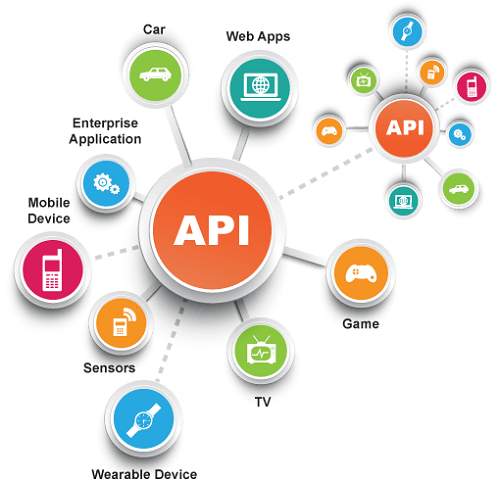
An API-first approach can help organizations create a unified customer journey across websites, mobile applications, customer service platforms, partner channels and other touchpoints.
For example, a customer might begin an interaction through a mobile application and continue it through a support representative.
If both channels access the same underlying customer and transaction services, the transition can be relatively seamless.
Without those connections, customers may have to repeat information or encounter inconsistent answers.
Connectivity therefore becomes part of customer experience design.
The quality of an organization’s APIs can indirectly influence how customers perceive the brand.
The API-First Approach and Artificial Intelligence
The rise of AI makes connected enterprise systems even more important.
AI applications are only as useful as the information and capabilities they can access.
A conversational AI assistant may be excellent at understanding language, but it cannot provide accurate order information unless it can connect to an order management system.
An AI sales assistant cannot recommend the right product if it cannot access current pricing and inventory.
An AI customer service agent cannot resolve an account issue if it cannot interact with relevant business systems.
APIs provide the connective layer.
They allow AI systems to retrieve information and potentially initiate approved actions.
This creates a powerful combination.
AI provides intelligence.
APIs provide access to business capabilities.
Together, they can enable AI systems to move beyond answering questions toward performing useful business tasks.
For example, an AI assistant could interpret a customer’s request, retrieve the relevant account information through an API, check an order status, initiate an approved workflow and communicate the result.
The AI does not need direct access to every underlying database.
It can interact with controlled interfaces.
This can improve both flexibility and governance.
APIs as the Foundation for Automation
Automation has traditionally required substantial integration work.
Whenever a company wanted one system to trigger an action in another, developers often had to build custom connections.
APIs make automation more systematic.
A customer submits a support request. An API can create the ticket.
A payment succeeds. An API can trigger order fulfillment.
A new employee joins the organization. APIs can initiate account provisioning across multiple systems.
A product goes out of stock. APIs can update availability across digital channels.
The value comes from connecting events and actions.
Over time, these connections can create increasingly automated business processes.
This is particularly important as companies look for ways to improve productivity without continuously increasing headcount.
Automation does not necessarily eliminate human involvement.
Instead, it can remove repetitive coordination work so employees can focus on decisions, relationships and tasks that require judgment.
Breaking Down Organizational Silos
Technology silos often reflect organizational silos.
Different departments may purchase different software platforms. They may maintain separate databases and establish their own processes.
Over time, this creates fragmented information.
Marketing may not have the same customer information as sales. Sales may not have visibility into customer service interactions. Finance may operate with data that is updated on a different schedule.
An API-first architecture can help create a more connected enterprise without requiring every department to abandon its existing systems.
APIs can act as bridges between systems.
This does not mean every system must be replaced with a single platform.
In many organizations, that would be unrealistic and unnecessarily expensive.
Instead, businesses can focus on making important capabilities accessible through consistent interfaces.
The goal is not to eliminate every application.
It is to reduce unnecessary isolation between them.
APIs Can Accelerate Ecosystem Growth
The benefits of API-first architecture extend beyond internal systems.
Companies increasingly operate as part of digital ecosystems involving suppliers, distributors, technology providers, marketplaces and other partners.
APIs can make these relationships easier to scale.
A logistics company could provide shipment tracking capabilities to business customers. A financial technology company could expose payment capabilities to software platforms. A retailer could provide inventory information to approved partners.
This creates opportunities for new business models.
APIs can become distribution channels for digital capabilities.
Instead of requiring customers or partners to use a company’s application directly, an organization can allow them to integrate specific capabilities into their own products and workflows.
This can expand reach while creating new sources of value.
Security Cannot Be an Afterthought
The more connected an enterprise becomes, the more important API security becomes.
Every interface can potentially create an entry point into business systems.
An API-first strategy therefore needs strong security practices from the beginning.
These can include:
- Authentication and authorization
- Encryption
- Rate limiting
- Input validation
- Access controls
- API monitoring
- Threat detection
- Version management
- Detailed audit logging
Organizations should also adopt the principle of least privilege.
An application should receive only the access it needs to perform its function.
For example, an application that only needs to retrieve order status should not automatically receive permission to modify customer records.
Good API architecture separates capabilities and limits exposure.
Security should be part of API design rather than something added after development.
Governance Becomes More Important as APIs Multiply
An enterprise with five APIs can manage them informally.
An enterprise with hundreds or thousands cannot.
As API adoption grows, organizations need governance.
This includes establishing standards for naming, documentation, authentication, versioning, monitoring and lifecycle management.
API catalogs can help teams discover existing capabilities before building new ones.
This is an important but often overlooked benefit.
Without visibility, developers may repeatedly build similar integrations because they do not know an existing API already provides the required capability.
Good governance reduces duplication.
It also makes APIs easier to maintain over time.
An API is not finished when it is deployed. It becomes part of the organization’s technology ecosystem and needs to be managed accordingly.
Measuring the Business Value of API-First Architecture
The value of API-first transformation should not be measured only through technical metrics.
Businesses should connect API investments to measurable outcomes.
Relevant metrics can include:
- Time required to launch new digital products
- Integration development time
- Number of reusable business capabilities
- Cost per integration
- Automation rates
- Customer service resolution time
- Digital conversion rates
- Developer productivity
- Partner onboarding time
- System reliability
For example, if a company reduces partner onboarding from six weeks to three days because partners can integrate through standardized APIs, that is a business outcome.
If a new digital product can reuse existing payment, identity and customer APIs instead of rebuilding those capabilities, that can translate into lower development costs.
The technical architecture becomes valuable because it changes what the business can do.
Moving Toward an API-First Culture
Becoming API-first is not simply a matter of adopting new technology.
It requires a shift in how organizations design systems.
Development teams need to think about interfaces early. Business leaders need to identify which capabilities should be reusable. Security teams need to be involved from the beginning. Product teams need to consider how services can support multiple customer experiences.
Most importantly, APIs need to be treated as products.
That means thinking about their users.
An API should have clear documentation. Its behavior should be predictable. Its performance should be monitored. Changes should be communicated. Its lifecycle should be managed.
The users of an API may not be external customers.
They may be internal developers, partner organizations or other applications.
But they still need a reliable product experience.
The Competitive Advantage of Being Connected
Digital transformation was once largely about putting business processes online.
The next stage is about connecting those processes.
Companies already have enormous amounts of data, software and digital capabilities. The competitive question is whether those assets can work together effectively.
An API-first enterprise is designed for connection.
Its systems can exchange information. Its capabilities can be reused. Its developers can build on existing services. Its partners can integrate more efficiently. Its AI systems can interact with controlled business functions.
This creates organizational flexibility.
And flexibility is increasingly valuable.
Markets change. Customer expectations evolve. New technologies emerge. Competitors introduce new products.
Businesses cannot predict every change, but they can build architectures that make responding to change easier.
That is the deeper value of API-first thinking.
It is not really about APIs.
It is about creating an enterprise that can connect, adapt and move.
Conclusion: Connectivity Is the New Enterprise Advantage
The future of enterprise technology will not be defined only by which applications a company owns.
It will increasingly be defined by how effectively those applications work together.
APIs provide the connective tissue.
They allow businesses to turn data and functionality into reusable capabilities. They can accelerate product development, enable automation, improve customer experiences and create stronger digital ecosystems.
They also provide an important foundation for the next generation of enterprise AI.
As organizations deploy AI agents and intelligent applications, those systems will need secure access to real business capabilities. APIs can provide that bridge.
The API-first enterprise therefore represents more than a technical architecture.
It represents a different way of building a business for a connected economy.
Companies that treat APIs as strategic assets can make their technology environments more modular, reusable and adaptable. Over time, those qualities can translate into faster innovation and lower costs.
The competitive advantage may not belong to the organization with the most technology.
It may belong to the organization that can connect its technology most effectively.
In a world where speed, automation and adaptability increasingly determine business performance, being connected is no longer just an IT advantage.
It is a business advantage.