
B2B companies run on processes.
A customer places an order. Sales enters the details into a CRM. Operations reviews the request. Finance checks payment terms. Procurement may contact suppliers. The warehouse prepares the order. Logistics handles delivery. Customer service manages questions or exceptions.
On paper, the process may look simple.
In reality, it can be much more complicated.
A single B2B transaction may move across several teams, systems, approval steps, spreadsheets, emails, and manual handoffs. When something takes too long, businesses often know that there is a problem but cannot clearly see where the delay begins or why it keeps happening.
This is where process mining can help.
Process mining uses operational data from business systems to show how processes actually work. Instead of relying only on interviews, assumptions, or process diagrams created months ago, companies can examine the digital trail left behind by real business activity.
For B2B organizations, this can reveal hidden bottlenecks, unnecessary steps, repeated work, long approval times, missed deadlines, and differences between the process people believe they follow and the process that actually happens.
The result is a more practical way to improve operations.
What Is Process Mining?
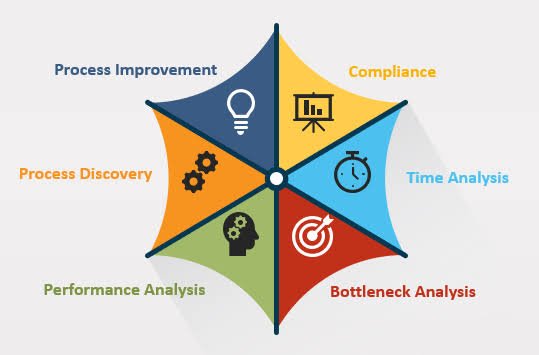
Process mining is a method for analyzing business processes using data generated by operational systems.
Most B2B processes leave behind digital records. An order might have a creation time, approval time, shipment time, and delivery time. A customer service request may have timestamps for opening, assignment, escalation, response, and closure.
Process mining connects these records to reconstruct the journey of each individual case.
A case could be:
- A customer order
- An invoice
- A purchase request
- A supplier transaction
- A customer support ticket
- A contract
- A shipment
- A product return
- A loan application
- A service request
The technology then helps businesses understand questions such as:
- Where do cases spend the most time?
- Which steps create the longest delays?
- How often does work move backward?
- How many approvals are actually required?
- Where does rework occur?
- Which teams receive the most exceptions?
- Why do some orders move quickly while others take days longer?
- Which parts of the process are handled manually?
- Are employees following the intended process?
- Which customers, products, regions, or order types experience the most delays?
The key idea is simple: process mining turns operational data into a view of how work moves through a business.
Why Process Bottlenecks Are Difficult to Find
Finding a bottleneck sounds straightforward.
If orders are taking too long, why not simply look at the order process and find the slow step?
The problem is that B2B processes rarely operate in a straight line.
Consider a typical order-to-cash process.
A sales representative creates an order. The order may then require pricing approval. Finance may review the customer’s credit status. Operations checks inventory. The warehouse prepares the goods. Logistics arranges shipping. Finance creates an invoice. The customer receives the invoice and eventually makes payment.
Now imagine that some orders take two days while others take twelve.
The average processing time tells you that there is a problem, but it does not necessarily explain the problem.
The delay could be caused by:
- A specific approval team
- Missing customer information
- Incorrect pricing
- Credit checks
- Inventory shortages
- Manual data entry
- Duplicate orders
- Email-based approvals
- System errors
- Repeated corrections
- Poor handoffs between departments
- Different procedures used by different teams
The bottleneck may also change over time.
For example, the finance team might be the main source of delays during one period, while inventory availability becomes the main issue during another.
Traditional reports often struggle to show these patterns because they focus on individual metrics rather than the complete flow of work.
Process mining looks at the flow.
How Process Mining Uses Operational Data
Process mining depends on data that records what happened during a business process.
This data usually comes from systems that B2B companies already use, including:
- CRM platforms
- ERP systems
- Accounting software
- Procurement platforms
- Customer service systems
- Warehouse management systems
- Supply chain platforms
- Order management systems
- HR systems
- IT service management tools
A useful process dataset normally contains three important elements:
1. Case ID
The case ID identifies the individual business transaction.
For example, an order number can identify one customer order from beginning to end.
2. Activity
The activity describes what happened.
Examples include:
- Order created
- Order approved
- Credit checked
- Stock confirmed
- Invoice generated
- Shipment dispatched
- Payment received
3. Timestamp
The timestamp shows when each activity happened.
Together, these elements create a digital history of the process.
For example:
| Case ID | Activity | Timestamp |
|---|---|---|
| ORD-1045 | Order Created | 09:05 |
| ORD-1045 | Approval Requested | 09:20 |
| ORD-1045 | Order Approved | 14:10 |
| ORD-1045 | Stock Confirmed | 15:00 |
| ORD-1045 | Shipped | Next Day, 11:30 |
When thousands or millions of similar records are analyzed, patterns become much easier to see.
Process Mining vs. Traditional Process Mapping
Traditional process mapping usually starts with people.
A company may bring together sales, operations, finance, IT, and customer service teams and ask them to describe how a process works.
This can be useful.
However, people tend to describe the process as they understand it, not necessarily as it happens in every case.
A process diagram might show:
Order → Approval → Fulfillment → Invoice → Payment
The real process could look more like:
Order → Approval → Correction → Approval → Finance Review → Missing Information → Correction → Inventory Check → Manual Approval → Fulfillment → Invoice → Invoice Correction → Payment
That difference matters.
Process mining can show the actual variations within the process.
This does not make traditional process mapping useless. Instead, the two approaches can complement each other.
Process mapping describes the intended process.
Process mining helps reveal the actual process.
Finding Hidden Bottlenecks With Process Mining
One of the biggest benefits of process mining is its ability to expose bottlenecks that may not be obvious from standard reports.
1. Long Approval Queues
Approvals are common in B2B organizations.
Large orders may need management approval. Discounts may require commercial approval. New suppliers may require procurement and finance approval.
The approval itself may take only a few minutes.
The waiting time before someone reviews the request can take several days.
This distinction is important.
A report might show that an approval process takes three days. Process mining can help determine whether those three days are caused by actual review work or by requests sitting in a queue.
This allows businesses to ask a better question:
Are approvals taking too long, or are requests waiting too long to be approved?
The solution could be different in each case.
2. Repeated Rework
Rework is another common hidden bottleneck.
Imagine an order that follows this pattern:
Order Created → Approved → Rejected → Corrected → Resubmitted → Approved
The business may count this as one completed order.
But operationally, the order required additional work.
Process mining can identify how frequently these loops occur and which types of cases are most likely to enter them.
For example, the analysis might reveal that orders containing certain discount levels require significantly more corrections.
That finding can lead to a targeted improvement, such as clearer pricing rules or better information at the beginning of the process.
3. Manual Handoffs
A process may cross several departments without any obvious system integration.
An employee may export data from one system, edit a spreadsheet, email it to another team, and wait for someone else to update a different system.
Each individual step may appear reasonable.
Together, they create delays.
Process mining can help identify where work repeatedly moves between systems or teams and where those handoffs correlate with longer cycle times.
4. Exception Handling
Most businesses design processes around the normal path.
Real customers, orders, suppliers, and invoices do not always behave normally.
An order may have unusual pricing. A customer may request a change. A supplier may miss a delivery date. A payment may not match an invoice.
Exceptions can consume significant operational capacity.
Process mining can show how often exceptions occur, where they happen, and how much additional time they add to a process.
This makes exception management measurable rather than anecdotal.
A Practical Example: B2B Order Processing
Consider a B2B distributor processing 50,000 orders each month.
Management notices that the average order-to-shipment time has increased.
The initial assumption is that the warehouse is overloaded.
The company analyzes its operational data using process mining.
The results show something different.
Most standard orders move through the warehouse quickly. However, a significant percentage of orders are delayed before reaching the warehouse.
The analysis identifies three recurring patterns:
- Orders with special pricing require additional approval.
- Some customer records contain incomplete information.
- Certain orders are repeatedly sent back to sales for correction.
The warehouse was not the primary bottleneck.
The real issue was upstream.
This is one of the main strengths of process mining. It can help businesses investigate the entire process rather than focusing only on the department where the problem becomes visible.
The Difference Between a Delay and a Bottleneck
Not every delay is a bottleneck.
A bottleneck is a part of the process that restricts overall flow or creates a significant accumulation of work.
For example, a customer service team may have a long queue on Monday morning because many requests arrive at once.
That does not necessarily mean the team is the permanent bottleneck.
A useful process analysis considers:
- How frequently the delay occurs
- How long cases wait
- How much work accumulates
- Whether the delay affects downstream activities
- Whether the issue repeats over time
- Which types of cases are affected
This distinction prevents companies from reacting to isolated problems instead of addressing structural issues.
Key B2B Processes That Can Benefit From Process Mining
Process mining is useful across many B2B functions.
Order-to-Cash
Order-to-cash is one of the most common areas for process analysis.
Businesses can investigate:
- Order processing time
- Approval delays
- Shipment delays
- Invoice errors
- Payment delays
- Credit review cycles
- Dispute handling
The goal is not simply to make orders move faster. It is to understand where unnecessary waiting, rework, and variation occur.
Procure-to-Pay
Procure-to-pay covers purchasing activities from the initial request through supplier payment.
Process mining can reveal:
- Slow purchase approvals
- Duplicate purchase orders
- Maverick purchasing
- Invoice mismatches
- Manual approvals
- Delayed goods receipt
- Supplier-related exceptions
This can help procurement and finance teams understand why apparently simple purchases take so long to complete.
Customer Service
Customer service processes can also contain hidden bottlenecks.
Businesses can examine:
- First response times
- Assignment delays
- Escalations
- Reopened tickets
- Transfer rates
- Resolution times
- Approval dependencies
For example, a company may discover that tickets are not taking long because agents are slow to resolve them. Instead, tickets may spend hours waiting to be assigned to the right team.
That is a very different problem.
Contract Management
B2B contracts often pass through sales, legal, finance, procurement, and management.
Process mining can help identify:
- Long review cycles
- Repeated contract changes
- Approval loops
- Delays between departments
- Frequently requested contract changes
- Bottlenecks in signature processes
This can help companies understand where contract value is being delayed before the agreement is finalized.
Important Metrics for Process Mining
Process mining becomes more useful when businesses connect process data to clear operational metrics.
Some useful measures include:
Cycle Time
How long does it take to complete a process from beginning to end?
For example:
Order Created → Order Shipped
Waiting Time
How long does work remain inactive between two activities?
Waiting time is often where hidden bottlenecks appear.
Processing Time
How much time is actually spent working on the case?
Comparing processing time with waiting time can reveal whether the problem is workload or queue management.
Rework Rate
How often does a case return to an earlier step?
A high rework rate can indicate unclear requirements, poor data quality, or inconsistent decisions.
Exception Rate
What percentage of cases leave the standard process?
High exception rates may indicate that the standard process does not match real business needs.
First-Time-Right Rate
How many cases complete a step correctly without needing correction?
This can be especially useful for orders, invoices, customer onboarding, and other data-heavy processes.
Process Mining Can Reveal Process Variations
B2B organizations rarely have only one process.
They often have many variations based on:
- Customer type
- Region
- Product
- Contract value
- Sales channel
- Payment terms
- Supplier
- Business unit
This is not necessarily a problem.
Different customers may legitimately require different processes.
The challenge is identifying which variations are necessary and which have developed because of outdated habits or inconsistent procedures.
Process mining can compare process paths across different groups.
For example:
Standard customer orders: 2 days
Enterprise customer orders: 5 days
Orders requiring special pricing: 8 days
That information gives operations teams a much clearer starting point for investigation.
Using Process Mining to Improve Customer Experience
Process efficiency is not only an internal issue.
Operational delays often become customer experience problems.
A delayed approval can become a late shipment.
A data-entry error can become an incorrect invoice.
A missing handoff can become a customer support complaint.
Process mining helps connect internal operations with customer-facing outcomes.
For example, a B2B company could analyze whether longer order processing times are associated with:
- More customer inquiries
- More cancellations
- More delivery complaints
- More invoice disputes
- Lower repeat order rates
This creates a stronger connection between process improvement and business outcomes.
Process Mining and Automation
Process mining can also help companies decide what should be automated.
Automation is often treated as the first step.
But automating a poorly designed process can simply make a bad process faster.
Process mining helps businesses understand the process first.
Suppose an organization discovers that employees spend thousands of hours manually checking information before approving orders.
The analysis can help determine:
- How often the check occurs
- Which cases require it
- Which rules are being applied
- Where data is missing
- How much time the activity consumes
The business can then decide whether automation, process redesign, better data collection, or a combination of these approaches makes sense.
The important point is that automation should solve a known problem rather than simply automate an existing habit.
How to Start a Process Mining Project
A successful process mining project does not need to begin with every process in the company.
Starting small is often more practical.
Step 1: Choose a Business Problem
Start with a measurable problem.
Examples include:
- Orders take too long to process.
- Customer onboarding is slow.
- Supplier invoices require too much manual work.
- Contract approvals are delayed.
- Support tickets are frequently reopened.
A clear problem makes it easier to measure improvement.
Step 2: Define the Process
Determine where the process starts and ends.
For example:
Start: Customer order created
End: Order shipped
Avoid making the initial scope unnecessarily broad.
Step 3: Identify Data Sources
Find the systems that record process events.
The data may exist across multiple systems, so understanding the connections between them is important.
Step 4: Build the Process View
Use the available event data to reconstruct how cases actually move through the process.
Look for:
- Common paths
- Rare paths
- Long waits
- Rework
- Exceptions
- Handoffs
- Process variations
Step 5: Investigate the Biggest Delays
Do not automatically focus on the most frequent activity.
A less frequent step may create a much larger delay.
Look at both frequency and business impact.
Step 6: Identify Root Causes
Once a bottleneck is visible, investigate why it happens.
For example, a delayed approval could be caused by:
- Too many approval levels
- Poor information quality
- Unclear responsibility
- High workload
- Manual communication
- System limitations
Step 7: Make a Targeted Change
Change one or more specific parts of the process.
Examples include:
- Removing an unnecessary approval
- Improving data validation
- Changing routing rules
- Reducing manual handoffs
- Standardizing exception handling
- Automating repetitive tasks
Step 8: Measure the Result
After making a change, continue monitoring the process.
The goal is not just to identify a bottleneck once.
The goal is to create continuous visibility into how the process performs.
Common Mistakes to Avoid
Process mining can provide valuable insight, but the technology itself does not guarantee better processes.
Several mistakes can reduce its value.
Focusing Only on Average Cycle Time
An average can hide important differences.
Two processes can have the same average cycle time while having very different patterns.
Look at the distribution and different process paths as well.
Ignoring Data Quality
Poor data produces poor analysis.
Missing timestamps, inconsistent activity names, duplicate records, or disconnected systems can make process analysis misleading.
Data quality should be treated as part of the project rather than an afterthought.
Trying to Analyze Everything
It is tempting to connect every system and analyze every process.
That can create complexity without producing useful business insight.
Start with a high-value process and a specific problem.
Treating Every Variation as Bad
Process variation is not automatically waste.
Some variations exist for valid business reasons.
The objective is to understand variation, not eliminate it blindly.
Blaming Individuals
Process mining is most useful when it focuses on systems and workflows rather than finding someone to blame.
If a task is repeatedly delayed, the important question is not simply who is responsible.
The better questions are:
- Why does the queue exist?
- What information is missing?
- Is the workload balanced?
- Is the process designed correctly?
- Can the handoff be improved?
This approach makes process improvement more constructive.
Process Mining and Data-Driven Decision-Making
One of the biggest advantages of process mining is that it changes how organizations discuss operational problems.
Without process data, a meeting might sound like this:
“Finance is slowing down orders.”
Finance may respond:
“We only receive incomplete information from sales.”
Sales may say:
“We have to work with what customers provide.”
Each team has a different view.
Process data gives everyone a shared picture.
Instead of debating perceptions, teams can examine where delays actually occur, how frequently they occur, and which conditions are associated with them.
This does not eliminate the need for human judgment.
It improves the information available for that judgment.
The Future of Process Mining in B2B Operations
As B2B companies generate more digital operational data, process analysis is becoming increasingly practical.
The opportunity is not simply to create more dashboards.
It is to understand how work moves across the organization.
Future process improvement efforts are likely to combine process mining with automation, analytics, artificial intelligence, and real-time monitoring.
For example, a company could identify that a particular type of order frequently becomes delayed and then create an automated alert before the delay occurs.
Instead of asking:
“Why was this order delayed?”
the organization can a specific business problem, identify the relevant operational data, map the actual process, investigate the biggest sources of delay, make targeted improvements, and measure what changes move toward:
“Which orders are likely to become delayed, and what can we do now?”
That shift from reacting to problems toward identifying them earlier can make process management more proactive.
What B2B Leaders Should Look for in Operational Data
For business leaders, the value of process mining is not in the technology itself.
The real value comes from answering important operational questions.
Ask:
- Where does work wait?
- Where does work get repeated?
- Where are customers affected?
- Which approvals create delays?
- Which processes vary the most?
- Where do teams depend on spreadsheets or email?
- Which exceptions happen most often?
- Which problems create the greatest financial impact?
- Which improvements can be measured?
These questions help turn operational data into practical action.
Conclusion
B2B organizations often have more process data than they realize.
Every order, invoice, approval, support ticket, contract, shipment, and payment can leave behind a digital trail. When that information is connected and analyzed, businesses can gain a clearer picture of how work actually moves through the organization.
Process mining helps turn that digital trail into operational insight.
It can reveal hidden bottlenecks, long waiting periods, repeated work, unnecessary process variations, manual handoffs, and exception patterns that traditional reporting may miss.
More importantly, it gives teams a way to investigate operational problems using evidence rather than assumptions.
The most effective approach is to start with a specific business problem, identify the relevant operational data, map the actual process, investigate the biggest sources of delay, make targeted improvements, and measure what changes.
For B2B companies looking to improve efficiency, customer experience, and operational visibility, process mining can provide a practical way to understand what is really happening behind the numbers.
The goal is not simply to make processes faster.
The goal is to understand where work gets stuck, why it gets stuck, and what can be changed to make the entire process work better.
If you want, I can also turn this into a more commercial SEO article with target keywords, FAQs, featured-snippet sections, internal-link suggestions, and a stronger B2B SaaS conversion angle.