Introduction: The Evolution of SaaS Is Becoming Intelligent
Software as a Service (SaaS) has transformed how businesses operate. From customer relationship management (CRM) and enterprise resource planning (ERP) to marketing automation and project management, cloud-based software has made business operations more accessible, scalable, and efficient.
But the SaaS industry is entering another significant phase of transformation.
Artificial intelligence (AI) is no longer limited to standalone applications, experimental tools, or advanced technology platforms. It is increasingly becoming an integrated part of everyday business software.
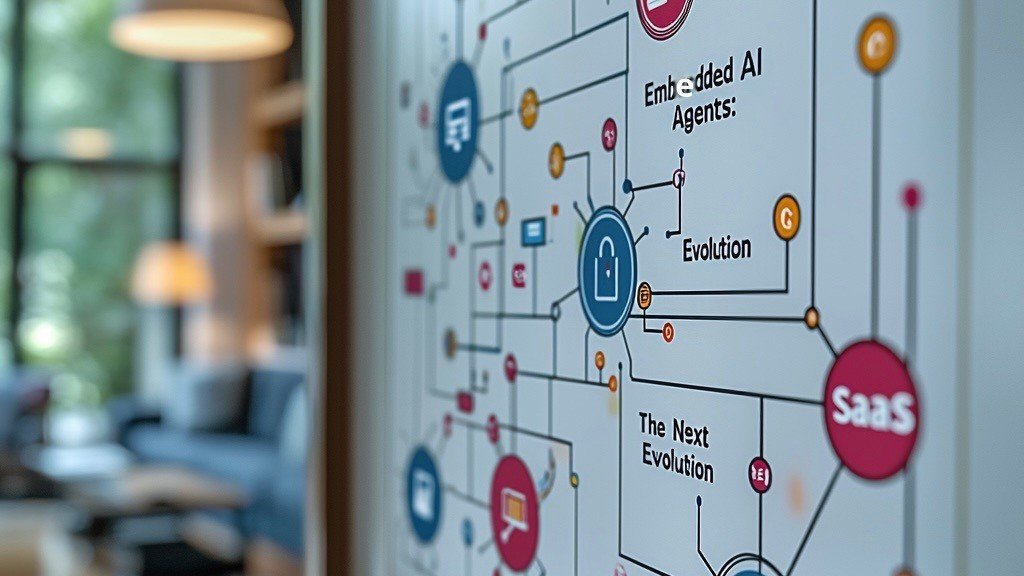
This shift is known as embedded AI in SaaS.
Instead of requiring users to switch between multiple applications to access AI capabilities, modern SaaS platforms are incorporating intelligence directly into their existing workflows. These capabilities help businesses automate repetitive tasks, analyze information, generate insights, predict outcomes, and make better decisions.
In 2026, the conversation is no longer simply about whether SaaS products should include AI. It is increasingly about how effectively they can integrate intelligence into their core functionality while maintaining security, reliability, and measurable business value.
The key takeaway? AI is evolving from an additional software feature into an essential component of the modern SaaS experience.
What Is Embedded AI in SaaS?
Embedded AI in SaaS refers to the integration of artificial intelligence capabilities directly into cloud-based software applications to improve functionality, automate workflows, and enhance user experiences.
Unlike standalone AI tools that operate independently, embedded AI works within the software users already depend on.
For example:
- A CRM platform can use AI to predict which leads are most likely to convert.
- An accounting application can automatically identify unusual transactions.
- A project management platform can predict potential project delays.
- A customer support system can suggest responses and categorize incoming tickets.
- A marketing platform can analyze customer behavior and recommend personalized campaigns.
The primary objective is to make software more intelligent, proactive, and efficient without requiring users to develop specialized AI expertise.
In simple terms, embedded AI allows software to do more than store information and execute predefined instructions. It enables applications to understand patterns, generate recommendations, and assist with decision-making.
Why Is AI Becoming a Standard Feature in SaaS?
The growing adoption of AI in SaaS is driven by changing customer expectations, increasing operational complexity, and the demand for more productive business workflows.
Businesses no longer want software that simply helps them complete tasks. They want solutions that help them complete those tasks faster, with greater accuracy and less manual intervention.
Here are the major reasons behind this transformation.
1. Businesses Expect More Than Basic Automation
Traditional SaaS platforms primarily rely on predefined rules and workflows.
For example, a conventional automation system might send an email whenever a customer submits a form. While useful, this process follows fixed instructions.
AI-powered SaaS can take automation further by analyzing customer behavior, identifying patterns, and recommending an appropriate follow-up action.
This creates a shift from rule-based automation to intelligent automation.
Businesses can benefit from:
- Automated data classification.
- Intelligent task prioritization.
- Predictive recommendations.
- Context-aware workflow automation.
- AI-assisted decision-making.
The result is software that actively supports business operations rather than simply executing instructions.
2. Increasing Demand for Productivity and Efficiency
Time is one of the most valuable resources for any organization.
Employees spend considerable time searching for information, preparing reports, responding to routine inquiries, updating records, and performing repetitive administrative tasks.
Embedded AI helps reduce this workload.
For instance, an AI-enabled CRM can summarize customer interactions, prepare meeting notes, identify sales opportunities, and recommend follow-up activities.
Similarly, AI-powered project management software can summarize project updates, identify bottlenecks, and highlight tasks that require attention.
By reducing repetitive work, businesses can allow employees to focus on activities that require creativity, strategic thinking, and human judgment.
3. Growing Customer Expectations for Personalized Experiences
Modern customers expect businesses to understand their preferences and provide relevant experiences.
Traditional software often relies on manually configured segmentation and predefined customer journeys.
Embedded AI can analyze customer interactions, purchasing behavior, browsing patterns, and historical data to support more personalized experiences.
For example, an AI-powered e-commerce SaaS platform can:
- Recommend products based on customer interests.
- Identify purchasing patterns.
- Personalize marketing messages.
- Predict potential customer churn.
- Recommend relevant offers.
This makes personalization more dynamic and data-driven.
4. AI Integration Is Becoming a Competitive Necessity
As more SaaS providers introduce AI-powered capabilities, customer expectations are changing.
AI features that once helped software companies stand out are increasingly becoming baseline expectations in many product categories.
For SaaS providers, this creates an important challenge: simply adding an AI chatbot is no longer enough.
The real competitive advantage comes from integrating AI into workflows where it can deliver meaningful business outcomes.
Key Applications of Embedded AI Across SaaS Platforms
Embedded AI is transforming multiple SaaS categories. Its applications vary depending on the business function, but the underlying objective remains the same: making software more intelligent and useful.
1. Customer Relationship Management (CRM)
AI-powered CRM platforms analyze customer interactions, predict lead conversion probabilities, identify sales opportunities, and recommend next-best actions.
Business value: Better sales prioritization and customer relationship management.
2. Finance and Accounting Software
Embedded AI can categorize transactions, identify unusual financial activity, assist with invoice processing, and generate financial summaries.
Business value: Reduced manual effort and improved financial visibility.
3. Project Management Software
AI can summarize project updates, recommend task priorities, identify potential bottlenecks, and help teams understand project progress.
Business value: More informed planning and improved team productivity.
4. Customer Support Platforms
AI-powered support systems can classify tickets, suggest responses, summarize conversations, and route customer inquiries to appropriate teams.
Business value: Faster support workflows and more consistent customer experiences.
5. Marketing Automation Software
AI can analyze campaign performance, identify audience segments, generate content suggestions, and support personalized customer journeys.
Business value: More relevant campaigns and data-informed marketing decisions.
6. Human Resource Management (HRM) Software
AI can assist with recruitment administration, employee queries, workforce analytics, and HR documentation.
Business value: Streamlined HR processes and improved access to workforce information.
Embedded AI vs. Traditional SaaS: What Is Changing?
Traditional SaaS applications are designed primarily to help users manage information and execute predefined workflows.
AI-powered SaaS applications introduce another layer of intelligence that helps users interpret information, identify opportunities, and automate more complex tasks.
Here is how the two approaches compare:
| Traditional SaaS | AI-Powered SaaS |
|---|---|
| Rule-based automation | Intelligent automation |
| Manual data analysis | AI-assisted insights |
| Static reporting | Predictive analytics |
| Manual task prioritization | Intelligent recommendations |
| Fixed user workflows | Adaptive workflows |
| Keyword-based search | Context-aware search |
| Reactive operations | More proactive assistance |
The difference is not that traditional SaaS becomes irrelevant. Rather, AI expands what existing software can accomplish.
The future of SaaS is likely to combine the reliability of conventional software with the adaptability and intelligence of AI.
How Embedded AI Works Within a SaaS Application
Understanding how embedded AI works is important for businesses evaluating AI-powered software and SaaS companies developing intelligent products.
Although implementation varies across platforms, a typical embedded AI architecture involves several interconnected components.
1. Data Collection and Integration
AI systems require relevant information to generate useful outputs.
A SaaS application may use structured and unstructured data, including:
- Customer records.
- Transaction histories.
- Business documents.
- User interactions.
- Application activity.
- Historical performance data.
The quality, relevance, and accessibility of this information influence AI performance.
2. AI Models and Processing
Once relevant data is available, AI models process it to identify patterns, generate content, classify information, or produce predictions.
Depending on the application, SaaS providers may use machine learning, natural language processing, generative AI, or other AI techniques.
3. Application Integration
AI capabilities are connected to the SaaS application’s existing features, interfaces, and workflows.
For example, an AI assistant inside a CRM should be able to work with authorized customer records and relevant sales information rather than functioning as an isolated chatbot.
4. Contextual Recommendations and Automation
The system presents useful recommendations, summaries, predictions, or automated actions within the user’s workflow.
For sensitive or consequential operations, human approval should remain part of the process.
5. Monitoring and Continuous Improvement
AI performance must be monitored after deployment.
SaaS providers need to evaluate accuracy, response quality, security, user feedback, system performance, and operational costs.
The Business Benefits of Embedded AI in SaaS
Integrating AI into SaaS platforms can create value for both software providers and their customers.
Let’s explore the most important benefits.
1. Improved Operational Efficiency
AI can automate repetitive activities such as data entry, information extraction, ticket classification, and report generation.
This reduces manual workloads and allows employees to spend more time on higher-value activities.
2. Better Decision-Making
AI-powered analytics can help businesses identify trends, understand customer behavior, detect anomalies, and evaluate potential outcomes.
Instead of relying entirely on manual reporting, decision-makers can access relevant insights within their existing software.
3. Enhanced Customer Experience
AI-powered recommendations, contextual assistance, and faster support workflows can make software easier to use.
Personalized experiences can also help businesses respond more effectively to customer needs.
4. Reduced Workflow Complexity
Employees often switch between several applications to gather information and complete tasks.
Embedded AI can bring information, recommendations, and automation into a single working environment, reducing unnecessary context switching.
5. Increased Product Value
For SaaS providers, AI can improve the overall usefulness of their products.
When integrated effectively, intelligent capabilities can strengthen customer engagement, improve product adoption, and create opportunities for premium offerings.
However, these benefits should be measured against implementation costs, AI usage expenses, and actual customer outcomes rather than assumed simply because an AI feature exists.
Why SaaS Companies Must Rethink Their Product Strategy
The growing importance of embedded AI is changing how SaaS companies approach product development.
Previously, product differentiation often depended on usability, integrations, scalability, pricing, and feature availability.
These factors remain important, but intelligence is becoming another major consideration.
SaaS businesses need to think beyond adding AI-powered buttons or chat interfaces.
They must understand where AI can genuinely improve the customer’s workflow.
1. Move From Feature Development to Outcome-Based Development
Customers are not necessarily looking for more software features. They want solutions to business problems.
For example, instead of promoting an AI-powered reporting feature, a SaaS company can demonstrate how its platform helps users generate reports faster and identify important performance trends.
This shifts product messaging from technical capabilities to measurable business outcomes.
2. Build AI Into Existing Workflows
AI should feel like a natural extension of the software.
Users should not need to learn an entirely different system to benefit from intelligent capabilities.
For example, an AI recommendation inside a sales dashboard is often more useful when it appears alongside the relevant customer information and sales activity.
3. Focus on Context and Data Quality
An AI system is only as useful as the information and context available to it.
SaaS providers should prioritize:
- Reliable data integrations.
- Consistent data structures.
- Appropriate access permissions.
- Relevant business context.
- High-quality knowledge sources.
4. Make AI Trustworthy and Transparent
Businesses need to understand how AI features use their data, what actions they can perform, and where human oversight is necessary.
Transparency and responsible AI practices should be built into the product strategy from the beginning.
Challenges of Integrating AI Into SaaS Platforms
While embedded AI offers considerable opportunities, its implementation also introduces technical, operational, and business challenges.
Ignoring these challenges can undermine customer trust and reduce the value of AI investments.
1. Data Privacy and Security
AI-powered SaaS applications may process sensitive customer, financial, employee, and operational information.
SaaS providers must establish appropriate safeguards for data access, storage, processing, and sharing.
Businesses should understand whether customer information is used to train third-party models, how long prompts and outputs are retained, and which external providers process their data.
2. AI Accuracy and Reliability
AI-generated responses and recommendations are not always accurate.
Generative AI systems can produce misleading information or confidently present incorrect outputs.
For business-critical applications, providers should implement validation mechanisms, appropriate human review, and clear limitations.
3. Integration Complexity
Integrating AI into an established SaaS platform can require changes to existing infrastructure, databases, APIs, security controls, and workflows.
Poor integration can create performance issues and inconsistent user experiences.
4. Implementation and Operational Costs
AI capabilities introduce additional expenses, including:
- Model inference and API costs.
- Cloud infrastructure.
- Data processing.
- Model evaluation.
- Security and compliance.
- Ongoing monitoring and maintenance.
SaaS companies must ensure that AI features deliver sufficient customer value to justify these costs.
5. User Adoption and Change Management
Even useful AI capabilities can fail if employees do not understand how to use them.
SaaS providers should focus on intuitive interfaces, clear explanations, user education, and practical onboarding.
What Does the Future of Embedded AI in SaaS Look Like?
The future of SaaS is moving toward applications that do more than respond to user instructions.
Emerging AI technologies are enabling software to understand context, recommend actions, coordinate workflows, and perform certain tasks with limited human intervention.
Several developments are likely to shape this evolution.
1. AI Copilots Will Become Part of Everyday Software
AI copilots are assistants integrated into existing applications.
They can help users summarize documents, draft communications, analyze information, and navigate complex workflows.
Rather than replacing the core software interface, copilots can make it easier to use.
2. AI Agents Will Enable More Autonomous Workflows
AI agents represent a further development in embedded AI.
Unlike basic AI assistants that primarily respond to questions, agents can be designed to plan and execute multi-step tasks using authorized tools.
For example, an AI agent in a customer support platform could:
- Analyze an incoming support request.
- Retrieve relevant customer information.
- Identify the likely issue.
- Recommend a solution.
- Prepare a response.
- Escalate the case when human intervention is required.
Such workflows require appropriate permissions, monitoring, and approval mechanisms.
3. Predictive Intelligence Will Become More Accessible
Predictive analytics will increasingly become part of everyday SaaS workflows.
Instead of simply reporting historical performance, software can help users anticipate:
- Customer churn.
- Sales pipeline changes.
- Inventory requirements.
- Project delays.
- Financial irregularities.
- Operational bottlenecks.
The objective is to help businesses make informed decisions before problems become more difficult to address.
4. Natural Language Interfaces Will Simplify Software Usage
Users may increasingly interact with SaaS platforms through natural language.
For example, instead of manually applying filters and generating a report, a user could ask:
“Show me the sales performance of the last three months and identify the regions with declining revenue.”
The platform can interpret the request and generate a relevant report, subject to the user’s permissions and available data.
5. AI-Driven Personalization Will Improve User Experiences
Future SaaS platforms may adapt dashboards, recommendations, and workflows according to user roles, preferences, and activities.
This could make enterprise software more relevant to individual employees while maintaining organizational controls.
6. Outcome-Based SaaS Pricing May Gain Momentum
Traditional SaaS pricing commonly relies on subscriptions and per-user licensing.
As AI features introduce measurable automation and task execution, providers may experiment with usage-based, consumption-based, and outcome-oriented pricing.
However, businesses will need clear visibility into AI credits, consumption limits, and additional charges.
How Businesses Can Evaluate AI-Powered SaaS Solutions
The growing availability of AI features makes it important for organizations to evaluate software based on actual business requirements rather than marketing claims.
Here is a practical evaluation framework.
| Evaluation Factor | What Businesses Should Check |
|---|---|
| Business value | Does AI solve a real operational problem? |
| Accuracy | Are recommendations and outputs reliable? |
| Integration | Does AI work with existing workflows? |
| Security | Are data access and privacy protected? |
| Transparency | Can users understand AI-generated outputs? |
| Human oversight | Can users review and approve important actions? |
| Scalability | Can the system handle growing workloads? |
| Pricing | Are AI usage and additional costs transparent? |
Businesses should also run controlled pilot programs before deploying AI capabilities across the organization.
Start with a specific workflow, establish a baseline, measure the results, and expand only when the benefits are demonstrated.
Embedded AI in SaaS: What Businesses Should Measure
Implementing AI is not the same as achieving business value. SaaS providers and customers should track measurable performance indicators to understand whether embedded AI is delivering meaningful results.
Some useful KPIs include:
| KPI | What It Measures |
|---|---|
| Task completion time | Time saved through AI assistance |
| Automation rate | Percentage of eligible tasks automated |
| AI accuracy | Reliability of AI-generated outputs |
| User adoption rate | How frequently customers use AI features |
| Customer satisfaction | Impact on customer experience |
| Cost per AI task | Cost of delivering AI functionality |
| Workflow efficiency | Improvement in operational processes |
| Customer retention | Whether improved product value supports retention |
For example, if an AI-powered customer support feature reduces average ticket resolution time, the SaaS provider can compare performance before and after implementation.
The important point is to connect AI capabilities with measurable business outcomes.
Frequently Asked Questions (FAQs)
1. What is embedded AI in SaaS?
Embedded AI in SaaS refers to artificial intelligence capabilities integrated directly into cloud-based software applications. It enables software to automate tasks, analyze information, generate recommendations, predict outcomes, and improve user experiences without requiring separate AI applications.
2. Why is AI becoming a standard feature in SaaS?
AI is becoming a standard SaaS feature because businesses increasingly expect software to offer intelligent automation, predictive insights, personalized experiences, and improved productivity. Integrating AI into existing workflows also reduces the need to switch between multiple applications.
3. What are the benefits of embedded AI in SaaS?
The major benefits include:
- Increased operational efficiency.
- Reduced repetitive manual work.
- Improved decision-making.
- Personalized customer experiences.
- Better workflow automation.
- Enhanced product functionality.
- More accessible business intelligence.
4. What is the difference between embedded AI and standalone AI?
Embedded AI operates directly within an existing software application, using its workflows and relevant data to provide intelligent capabilities. Standalone AI operates as an independent tool that users access separately.
For example, an AI assistant integrated into a CRM is embedded AI, whereas a separate AI chatbot application is standalone AI.
5. How does embedded AI improve SaaS customer experience?
Embedded AI improves customer experience by providing contextual assistance, personalized recommendations, intelligent search, faster support, and automated workflows. It helps users accomplish tasks with fewer manual steps.
6. Is embedded AI in SaaS secure?
Embedded AI can be secure when implemented with appropriate data protection, encryption, access controls, monitoring, and privacy safeguards. However, security depends on the SaaS provider’s architecture, AI model integrations, data policies, and governance practices.
Businesses should review these factors before adopting AI-powered software.
7. What are examples of AI-powered SaaS applications?
Examples include:
- AI-powered CRM platforms for sales forecasting.
- Accounting software for transaction analysis.
- HR platforms for recruitment assistance.
- Marketing platforms for campaign personalization.
- Customer support systems for automated ticket classification.
- Project management platforms for task prioritization.
8. Will AI replace traditional SaaS platforms?
AI is more likely to transform and expand the capabilities of many SaaS platforms than eliminate them entirely. Traditional software functionality, data management, integrations, and security remain essential. AI adds another layer of intelligence to these capabilities.
9. What are AI agents in SaaS?
AI agents are systems designed to understand objectives, plan actions, and execute multi-step tasks using available tools and permissions. Within SaaS applications, they can help automate workflows such as customer support, sales operations, and business reporting.
10. What should businesses consider before adopting AI-powered SaaS?
Businesses should evaluate data security, AI accuracy, integration requirements, operational costs, scalability, transparency, human oversight, and measurable business value before adopting AI-powered SaaS solutions.
Conclusion: Intelligence Is Becoming the Foundation of Modern SaaS
The SaaS industry is moving beyond traditional cloud-based software toward intelligent, adaptive, and increasingly automated applications.
Embedded AI is driving this transformation by bringing machine learning, predictive analytics, generative AI, and intelligent automation directly into everyday business workflows.
For businesses, this means access to smarter tools that can reduce repetitive work, improve decision-making, and create more personalized experiences.
For SaaS providers, it represents an opportunity to rethink product development, strengthen customer value, and build more competitive software solutions.
However, successful AI integration requires more than adding new features. It requires a clear understanding of customer needs, reliable data, thoughtful product architecture, responsible AI practices, and measurable business outcomes.
The future of SaaS will not be defined simply by how much software businesses use, but by how intelligently that software helps them work.
As AI becomes an integral part of everyday applications, intelligence is moving from an optional advantage to an expected standard in modern software.