The B2B marketing landscape is evolving at an unprecedented pace. Marketing teams are expected to generate more qualified leads, create personalized customer experiences, optimize campaigns, and prove ROI—all while managing increasingly complex technology stacks and shrinking resources.
To meet these demands, organizations are turning to a new generation of intelligent automation: AI Agents.
Unlike traditional automation tools that follow predefined rules, AI Agents can analyze data, make decisions, execute tasks, and continuously improve their performance. They are rapidly becoming a critical component of modern B2B marketing operations, helping organizations streamline workflows, increase productivity, and drive revenue growth.
From lead generation and customer segmentation to content creation and campaign optimization, AI Agents are transforming how marketing teams operate.
In this article, we’ll explore how AI Agents are automating B2B marketing workflows, the benefits they deliver, key use cases, implementation strategies, and what the future holds for AI-powered marketing.
What Are AI Agents?
AI Agents are intelligent software systems capable of performing tasks autonomously on behalf of users or organizations.
Unlike traditional workflow automation platforms that rely on fixed rules and triggers, AI Agents can:
- Analyze large amounts of data
- Understand context
- Make decisions
- Execute actions
- Learn from outcomes
- Adapt to changing conditions
In B2B marketing, AI Agents function as virtual team members that can handle repetitive, data-intensive, and time-consuming tasks with minimal human intervention.
For example, an AI Agent can:
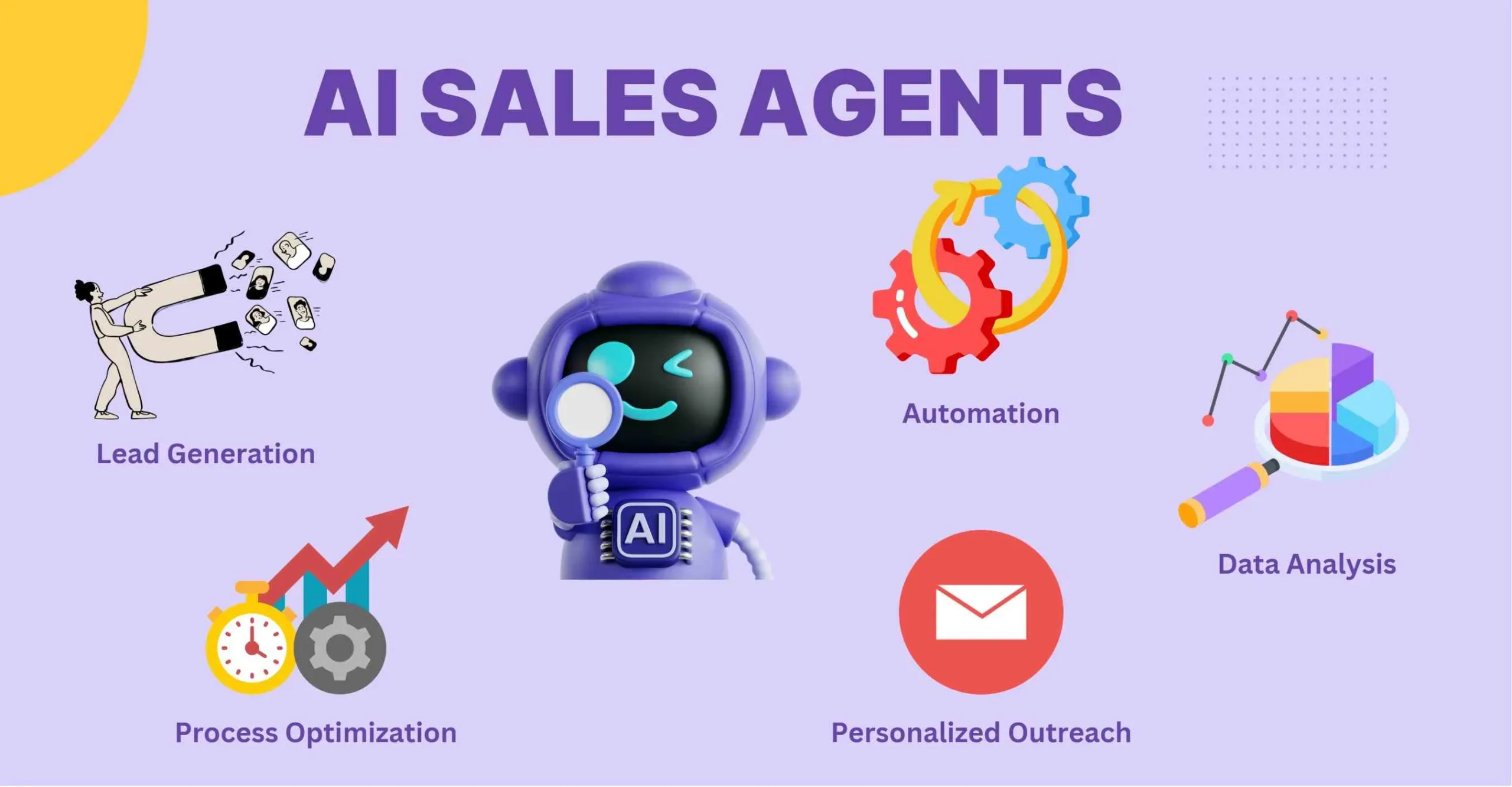
- Identify high-intent leads
- Create personalized email campaigns
- Schedule outreach sequences
- Optimize advertising spend
- Monitor campaign performance
- Generate reports
This allows marketing teams to focus on strategic initiatives while AI Agents handle operational execution.
Why B2B Marketing Needs AI Agents
B2B buying journeys have become significantly more complex.
Today’s buyers:
- Conduct extensive research before contacting sales
- Interact across multiple channels
- Expect personalized experiences
- Involve multiple stakeholders in decision-making
As a result, marketers face challenges such as:
- Managing large volumes of data
- Coordinating campaigns across channels
- Delivering personalized content at scale
- Tracking buyer intent
- Measuring revenue impact
Manual processes can no longer keep pace with these demands.
AI Agents help solve these challenges by providing intelligent automation that operates continuously and scales effortlessly.
The Evolution from Marketing Automation to AI Agents
Traditional marketing automation platforms transformed marketing by automating repetitive tasks such as:
- Email scheduling
- Lead scoring
- Workflow triggers
- CRM updates
However, these systems still require extensive human oversight.
For example:
A traditional workflow might state:
“If a lead downloads an ebook, send email sequence A.”
An AI Agent goes much further.
It can:
- Analyze lead behavior
- Determine purchase intent
- Personalize messaging
- Select the optimal communication channel
- Schedule outreach timing
- Adjust future interactions based on engagement
This shift moves marketing from rule-based automation to intelligent decision-making.
How AI Agents Are Automating B2B Marketing Workflows
1. Lead Generation and Prospect Discovery
Finding qualified prospects remains one of the most time-consuming marketing activities.
AI Agents can automate the entire prospecting process.
They continuously analyze:
- Company databases
- Industry websites
- Social media platforms
- Hiring trends
- News announcements
- Technology adoption signals
By identifying organizations that match ideal customer profiles (ICPs), AI Agents can build highly targeted prospect lists automatically.
Benefits
- Faster prospect identification
- Improved lead quality
- Reduced manual research
- Increased pipeline opportunities
Marketing teams can spend less time searching for prospects and more time engaging them.
2. Intelligent Lead Scoring
Traditional lead scoring models rely on static point systems.
For example:
- Webinar attendance = 10 points
- Whitepaper download = 5 points
- Demo request = 20 points
While useful, these models often fail to capture nuanced buying signals.
AI Agents continuously evaluate:
- Website activity
- Content engagement
- Email interactions
- Account behavior
- Intent data
- Historical conversion patterns
They dynamically adjust lead scores based on actual purchase likelihood.
This enables sales teams to prioritize high-value opportunities more effectively.
3. Personalized Email Marketing
Personalization has become a critical factor in B2B marketing success.
However, manually creating personalized campaigns for thousands of prospects is nearly impossible.
AI Agents can automatically:
- Segment audiences
- Generate personalized subject lines
- Create customized email content
- Optimize send times
- Adapt messaging based on engagement
Instead of sending generic campaigns, organizations can deliver highly relevant communications at scale.
The result is improved:
- Open rates
- Click-through rates
- Engagement
- Conversion rates
4. Content Creation and Content Operations
Content marketing remains a cornerstone of B2B demand generation.
Yet creating high-quality content consistently requires significant resources.
AI Agents are increasingly helping marketing teams automate content workflows.
They can:
- Generate blog outlines
- Draft articles
- Create social media posts
- Develop email copy
- Write ad variations
- Produce webinar summaries
More importantly, AI Agents can analyze audience behavior and identify content topics most likely to generate engagement.
This helps organizations create content that aligns with buyer interests and search demand.
5. Search Engine Optimization (SEO)
SEO requires continuous monitoring and optimization.
AI Agents can automate numerous SEO tasks, including:
Keyword Research
They identify:
- High-volume keywords
- Emerging search trends
- Competitive opportunities
- Long-tail keyword variations
Content Optimization
AI Agents evaluate content for:
- Keyword relevance
- Readability
- Search intent alignment
- Internal linking opportunities
Technical SEO Monitoring
They can detect:
- Broken links
- Indexing issues
- Duplicate content
- Site performance problems
By automating these activities, AI Agents help marketers improve organic visibility while reducing manual effort.
6. Customer Segmentation
Traditional segmentation often relies on basic demographic filters.
AI Agents use advanced analytics to create dynamic audience segments based on:
- Behavioral data
- Purchase history
- Engagement patterns
- Intent signals
- Industry trends
These segments update automatically as customer behavior changes.
This ensures campaigns remain relevant and highly targeted.
7. Account-Based Marketing (ABM)
Account-Based Marketing has become a leading strategy for enterprise B2B organizations.
However, ABM requires significant coordination and personalization.
AI Agents can automate many ABM activities by:
- Identifying target accounts
- Tracking stakeholder engagement
- Monitoring account activity
- Personalizing outreach
- Recommending next-best actions
This enables marketing and sales teams to engage key accounts more efficiently and effectively.
8. Social Media Management
Managing multiple social media channels can consume substantial time and resources.
AI Agents streamline social media workflows by:
- Creating content calendars
- Generating posts
- Scheduling content
- Monitoring engagement
- Identifying trending topics
- Analyzing performance
They can also recommend content strategies based on audience behavior and competitive activity.
9. Campaign Optimization
One of the most powerful capabilities of AI Agents is real-time optimization.
Traditional campaign management often involves periodic reviews and manual adjustments.
AI Agents continuously monitor:
- Click-through rates
- Conversion rates
- Cost per acquisition
- Audience engagement
- Funnel progression
Based on performance data, they can automatically:
- Reallocate budgets
- Adjust bidding strategies
- Refine targeting
- Modify creative assets
This ensures campaigns remain optimized at all times.
10. Marketing Analytics and Reporting
Many marketers spend hours compiling reports from multiple platforms.
AI Agents automate reporting by:
- Collecting data
- Cleaning datasets
- Generating dashboards
- Identifying trends
- Highlighting anomalies
They can even provide actionable recommendations based on performance patterns.
This enables faster and more informed decision-making.

Benefits of AI Agents in B2B Marketing
Increased Productivity
AI Agents eliminate repetitive manual tasks, allowing teams to focus on strategy, creativity, and customer engagement.
Better Personalization
They deliver individualized experiences across channels and touchpoints.
Faster Decision-Making
Real-time analysis enables organizations to respond quickly to changing market conditions.
Improved Lead Quality
Advanced scoring and intent analysis help identify the most valuable opportunities.
Enhanced Customer Experiences
Personalized interactions improve engagement throughout the buyer journey.
Greater Scalability
AI Agents can manage thousands of interactions simultaneously without increasing headcount.
Higher Marketing ROI
Automation and optimization improve efficiency and campaign performance.
Real-World Examples of AI Agents in B2B Marketing
Many organizations are already using AI Agents to transform marketing operations.
Examples include:
Automated Demand Generation
AI Agents identify target accounts, engage prospects, and nurture leads automatically.
Intelligent Content Marketing
AI-powered systems generate and optimize content based on audience interests and search behavior.
Predictive Pipeline Management
AI Agents forecast revenue outcomes and identify opportunities most likely to convert.
Conversational Marketing
AI-powered chat agents qualify leads, answer questions, and schedule meetings around the clock.
These applications demonstrate how AI Agents can support nearly every stage of the marketing funnel.
Challenges of Implementing AI Agents
While the benefits are substantial, successful implementation requires careful planning.
Data Quality Issues
AI Agents depend on accurate and complete data.
Poor data quality can reduce effectiveness and lead to incorrect recommendations.
Integration Complexity
Organizations often use multiple marketing technologies that must be connected for AI Agents to function effectively.
Governance and Compliance
Businesses must ensure AI-driven activities comply with privacy regulations and ethical standards.
Change Management
Teams may require training and process adjustments to fully leverage AI-powered workflows.
Best Practices for Deploying AI Agents
To maximize success, organizations should follow several best practices.
Start with High-Impact Workflows
Focus on processes that consume significant time and resources.
Examples include:
- Lead scoring
- Reporting
- Email personalization
- Campaign optimization
Define Clear Objectives
Establish measurable goals such as:
- Increasing lead conversion rates
- Improving campaign performance
- Reducing manual effort
Ensure Data Readiness
Clean, accurate data is essential for effective AI performance.
Maintain Human Oversight
AI Agents should augment human expertise rather than replace strategic decision-making.
Continuously Monitor Performance
Regular evaluation ensures AI Agents remain aligned with business objectives.
The Future of AI Agents in B2B Marketing
The role of AI Agents will continue expanding as technology advances.
Future capabilities may include:
Autonomous Campaign Management
AI Agents will design, launch, optimize, and report on campaigns with minimal human involvement.
Hyper-Personalization
Marketing experiences will become uniquely tailored to individual buyers and buying committees.
Predictive Revenue Intelligence
AI Agents will forecast revenue outcomes with greater accuracy and recommend actions to maximize growth.
Cross-Functional Collaboration
Future AI Agents may coordinate activities across:
- Marketing
- Sales
- Customer Success
- Revenue Operations
This will create a more unified revenue-generation engine.
Multi-Agent Ecosystems
Organizations may deploy specialized AI Agents for:
- Content creation
- SEO
- Advertising
- Lead nurturing
- Analytics
These agents will collaborate autonomously to achieve business goals.
Conclusion
AI Agents are rapidly transforming B2B marketing workflows by introducing a new level of intelligence, automation, and efficiency.
Unlike traditional automation systems that follow predefined rules, AI Agents can analyze data, make decisions, execute actions, and continuously improve outcomes. From lead generation and content creation to campaign optimization and predictive analytics, they are helping organizations streamline operations and drive measurable business results.
As buyer expectations continue to rise and marketing complexity increases, AI Agents will become an essential component of modern B2B marketing strategies.
Organizations that embrace AI Agents today will be better positioned to improve productivity, deliver personalized experiences, optimize revenue generation, and maintain a competitive advantage in an increasingly digital marketplace.
The future of B2B marketing is not simply automated—it is intelligent, adaptive, and powered by AI Agents.