Introduction
Revenue forecasting has always been one of the most challenging aspects of B2B sales management. Every quarter, sales leaders face the same question: How much revenue will the organization actually generate?
The answer influences hiring decisions, budget planning, investor expectations, resource allocation and overall business strategy. Yet despite the importance of accurate forecasting, many organizations continue to rely on outdated methods that often produce inconsistent results.
Traditional forecasting typically depends on salesperson estimates, historical performance and manually updated CRM records. While these approaches may provide a general picture of future revenue, they rarely account for the complexity of modern buying journeys.
Today’s B2B sales environment is far more dynamic. Buyers conduct extensive research before engaging with sales teams. Multiple stakeholders influence purchasing decisions. Economic uncertainty can change priorities overnight. As a result, relying solely on intuition or static pipeline reports is no longer enough.
This is where Predictive Pipeline Management comes into play.
Powered by artificial intelligence, machine learning and advanced analytics, predictive pipeline management enables organizations to forecast revenue with greater precision. Instead of simply reporting what is happening in the pipeline, predictive systems identify what is likely to happen next.
In 2026, predictive pipeline management has become a critical capability for revenue-driven organizations seeking to improve forecast accuracy, reduce risk and maximize sales performance.
This article explores how predictive pipeline management works, why it matters, key technologies driving its adoption and best practices for implementing it successfully.
What Is Predictive Pipeline Management?
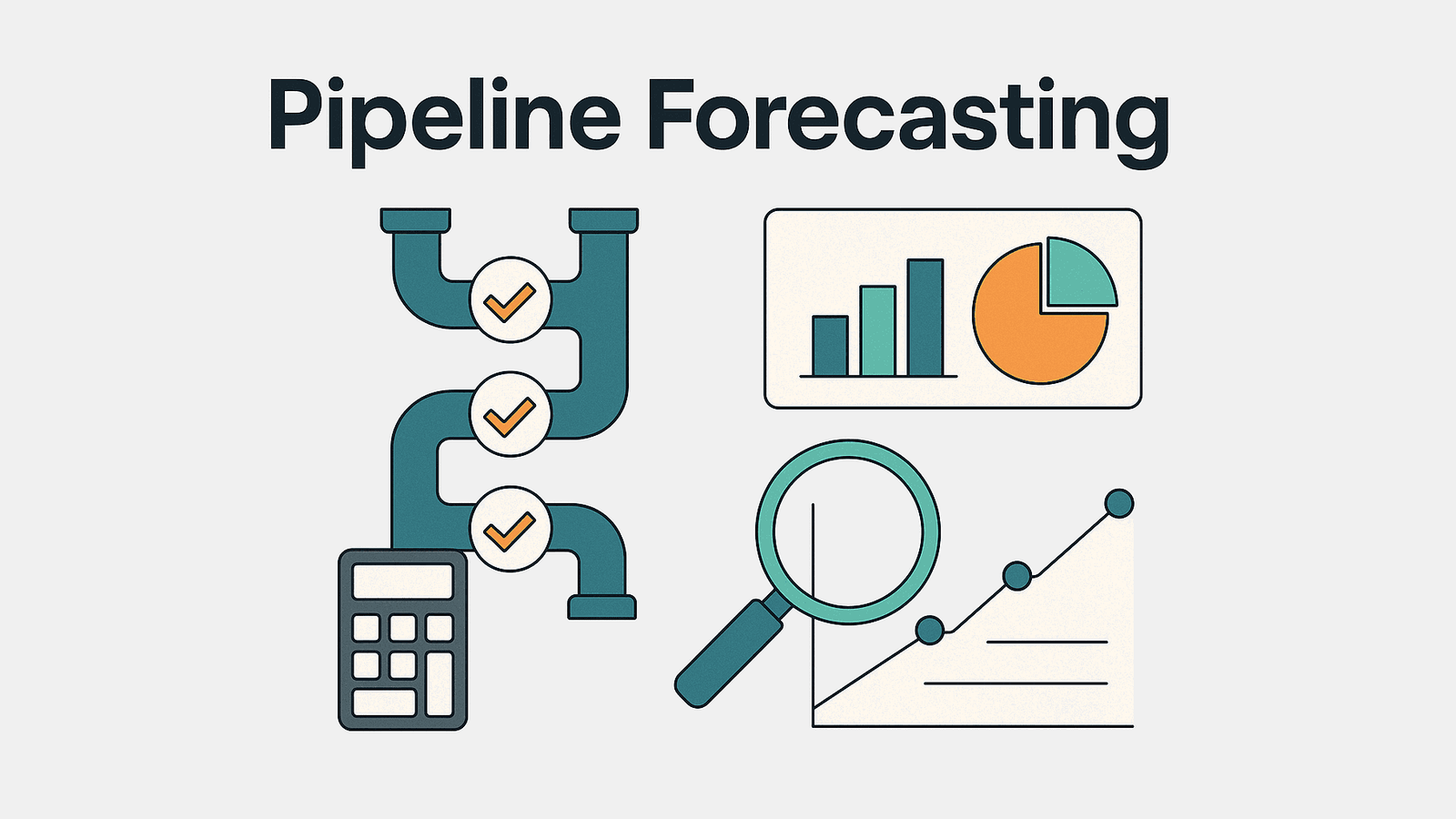
Predictive Pipeline Management is the practice of using data analytics, artificial intelligence and machine learning to evaluate sales opportunities and forecast future revenue outcomes.
Unlike traditional forecasting methods that rely heavily on historical data and human judgment, predictive systems analyze a broad range of variables in real time.
These variables may include:
- Customer engagement levels
- Deal progression
- Historical win rates
- Sales cycle trends
- Buyer intent signals
- Communication activity
- Market conditions
- Product usage behavior
- Competitive interactions
By analyzing these factors, predictive models calculate the probability of deals closing and generate more accurate revenue forecasts.
The primary goal is to transform forecasting from a reactive process into a proactive one.
Instead of asking sales representatives whether they believe a deal will close, predictive systems evaluate objective data to determine the likelihood of success.
Why Accurate Forecasting Matters
Forecasting is far more than a sales activity.
It directly impacts every area of the business.
When forecasts are inaccurate, organizations face several challenges:
- Overstaffing or understaffing teams
- Poor budget allocation
- Missed revenue targets
- Inventory planning issues
- Investor dissatisfaction
- Inefficient resource utilization
Accurate forecasting allows organizations to make confident business decisions.
For example, if leadership knows with reasonable certainty that revenue targets will be exceeded, they may choose to accelerate hiring or increase investment in growth initiatives.
Conversely, if forecasts indicate potential shortfalls, proactive measures can be taken before problems escalate.
Predictive pipeline management helps organizations move from uncertainty to confidence.
The Limitations of Traditional Pipeline Forecasting
Before understanding the advantages of predictive forecasting, it is important to examine why traditional methods often fail.
Stage-Based Forecasting
Many organizations assign fixed probabilities to sales stages.
For example:
- Prospecting: 10%
- Discovery: 25%
- Proposal: 60%
- Negotiation: 85%
Forecast values are calculated based on these percentages.
While easy to implement, this approach assumes that all opportunities within the same stage have identical chances of closing.
In reality, every opportunity is unique.
A proposal sent to an engaged buyer may be significantly more likely to close than a proposal sent to an unresponsive prospect.
Historical Forecasting
Historical forecasting relies on past performance.
Organizations often project future revenue based on previous quarters or years.
The challenge is that markets change constantly.
Customer expectations evolve. Competition increases. Economic conditions shift.
Past performance alone cannot accurately predict future outcomes.
Sales Representative Estimates
Many forecasts depend heavily on salesperson input.
While sales professionals possess valuable insight, human judgment is susceptible to bias.
Common forecasting biases include:
- Optimism bias
- Confirmation bias
- Wishful thinking
- Emotional attachment to deals
These biases can significantly distort forecasts.
Spreadsheet-Based Management
Despite advances in CRM technology, some organizations still manage forecasts through spreadsheets.
This approach creates challenges such as:
- Data inconsistencies
- Manual errors
- Limited visibility
- Slow reporting processes
As sales operations become more complex, spreadsheet forecasting becomes increasingly ineffective.

The Evolution of Forecasting Technology
Sales forecasting has evolved dramatically over the past two decades.
The Reporting Era
Early CRM systems functioned primarily as reporting tools.
Organizations used them to:
- Store customer information
- Track opportunities
- Generate reports
Forecasting remained largely manual.
The Analytics Era
Businesses began adopting dashboards and business intelligence platforms.
These systems provided insights into:
- Conversion rates
- Pipeline health
- Sales performance
Although visibility improved, forecasting remained reactive.
The Revenue Intelligence Era
Revenue intelligence platforms introduced deeper visibility into buyer interactions.
Organizations gained access to:
- Call analytics
- Meeting insights
- Email engagement metrics
- Activity tracking
This improved forecasting accuracy.
The Predictive Era
Today, artificial intelligence has transformed forecasting.
Modern systems can:
- Identify patterns
- Detect risks
- Predict outcomes
- Recommend actions
Forecasting has become significantly more sophisticated and data-driven.
Core Components of Predictive Pipeline Management
AI-Powered Opportunity Scoring
One of the most valuable capabilities of predictive forecasting is opportunity scoring.
Instead of relying solely on sales stages, AI evaluates multiple variables to determine deal quality.
Factors may include:
- Stakeholder engagement
- Meeting attendance
- Email responses
- Product interest
- Website activity
Each opportunity receives a score reflecting its likelihood of closing.
This allows sales teams to prioritize their efforts more effectively.
Deal Health Monitoring
Predictive systems continuously monitor the health of opportunities.
Indicators may include:
- Frequency of communication
- Response times
- Stakeholder involvement
- Progression through sales stages
When warning signs emerge, alerts are generated automatically.
This enables sales teams to take corrective action before deals are lost.
Pipeline Velocity Analysis
Pipeline velocity measures how quickly opportunities move through the sales process.
The calculation considers:
- Number of opportunities
- Average deal value
- Win rates
- Sales cycle length
A healthy pipeline moves steadily toward closure.
Predictive analytics helps identify bottlenecks that may slow revenue generation.
Forecast Modeling
Advanced forecasting models analyze historical and real-time data simultaneously.
These models estimate:
- Quarterly revenue
- Annual revenue
- Quota attainment
- Growth projections
Forecasts update dynamically as new information becomes available.
Buyer Intent Analysis
One of the most significant developments in modern forecasting is buyer intent analysis.
Intent signals may include:
- Content downloads
- Website visits
- Webinar participation
- Product research activity
- Search behavior
Organizations can use these signals to identify prospects who are actively evaluating solutions.
This significantly improves forecast accuracy.
Technologies Driving Predictive Pipeline Management
Artificial Intelligence
Artificial intelligence serves as the foundation of predictive forecasting.
AI can process enormous volumes of information that would be impossible for humans to analyze manually.
This includes:
- Customer interactions
- CRM data
- Market trends
- Behavioral patterns
The result is more accurate predictions and actionable insights.
Machine Learning
Machine learning allows forecasting systems to improve continuously.
As more deals are won or lost, the models learn from those outcomes.
Over time, prediction accuracy increases.
This adaptive capability makes machine learning particularly valuable in dynamic sales environments.
Natural Language Processing
Natural language processing enables systems to analyze conversations.
Sales calls, emails and meeting transcripts contain valuable information about buyer intent.
NLP can identify:
- Objections
- Competitive threats
- Purchase timelines
- Sentiment trends
These insights contribute to more reliable forecasts.
Revenue Intelligence Platforms
Revenue intelligence platforms gather information from multiple sources.
This includes:
- CRM systems
- Email platforms
- Call recordings
- Meeting software
Combining these data sources creates a comprehensive view of pipeline activity.
Predictive Analytics
Predictive analytics uses statistical modeling to forecast future outcomes.
The technology helps organizations:
- Estimate revenue
- Predict deal success
- Identify risks
- Improve planning
It serves as the analytical engine behind predictive pipeline management.
Benefits of Predictive Pipeline Management
Improved Forecast Accuracy
The most obvious advantage is more accurate forecasting.
Organizations gain a clearer understanding of future revenue performance.
This supports better decision-making across the business.
Early Risk Identification
Predictive systems detect risks before they become serious problems.
Examples include:
- Reduced buyer engagement
- Delayed responses
- Stalled opportunities
- Missing stakeholders
Early intervention increases the likelihood of successful outcomes.
Better Sales Productivity
Sales teams can focus their attention on opportunities with the highest probability of success.
This improves efficiency and maximizes selling time.
Stronger Pipeline Visibility
Leadership gains real-time visibility into:
- Deal health
- Revenue trends
- Forecast confidence
- Pipeline movement
This creates greater transparency across the organization.
Improved Resource Planning
Accurate forecasts enable organizations to allocate resources more effectively.
This includes:
- Hiring decisions
- Marketing investments
- Territory planning
- Budget management
Better planning contributes directly to business growth.
Key Metrics for Predictive Forecasting
Successful predictive pipeline management depends on monitoring the right metrics.
Win Rate
Win rate measures the percentage of opportunities that become customers.
Higher win rates generally indicate stronger sales performance.
Pipeline Coverage
Pipeline coverage compares total pipeline value to revenue targets.
A healthy pipeline typically contains multiple times the value of the quota.
Average Deal Size
Average deal size helps organizations estimate future revenue potential.
Changes in deal size may indicate shifting market conditions.
Sales Cycle Length
Tracking sales cycle duration helps forecast revenue timing more accurately.
Longer cycles can delay revenue realization.
Forecast Accuracy
Organizations should continuously compare forecasted revenue to actual revenue.
Improving forecast accuracy should be an ongoing objective.
Common Challenges in Predictive Pipeline Management
Data Quality Issues
Poor data quality remains one of the biggest obstacles to successful forecasting.
Challenges include:
- Missing information
- Duplicate records
- Outdated contacts
- Inaccurate opportunity data
Organizations must prioritize data governance.
User Adoption
Even the most advanced forecasting system is ineffective if sales teams fail to use it properly.
Successful adoption requires:
- Training
- Leadership support
- Clear processes
Consistency is critical.
Overreliance on Automation
Predictive systems are powerful but they are not infallible.
Human oversight remains important.
Sales leaders should combine AI insights with business context and experience.
Market Uncertainty
External factors can impact forecasts.
Examples include:
- Economic downturns
- Industry disruptions
- Regulatory changes
- Competitive shifts
Forecasting models must adapt quickly to changing conditions.
Best Practices for Successful Implementation
Establish Clean Data Practices
Accurate forecasting begins with accurate data.
Organizations should implement processes to maintain CRM quality.
Standardize Sales Processes
Consistent sales stages improve forecasting reliability.
Every opportunity should follow a clearly defined process.
Integrate Multiple Systems
Combining data from various platforms improves visibility and prediction accuracy.
Integrated ecosystems create stronger forecasting models.
Continuously Monitor Performance
Forecasting models should be evaluated regularly.
Organizations must track:
- Prediction accuracy
- Pipeline trends
- Model effectiveness
Continuous optimization drives better results.
Encourage Collaboration
Sales, marketing, customer success and finance teams should work together.
Cross-functional collaboration improves forecast quality and organizational alignment.
The Future of Predictive Pipeline Management
Predictive forecasting is evolving rapidly.
Several trends are expected to shape the future.
Autonomous Forecasting
AI agents will increasingly manage forecasting processes independently.
They will:
- Analyze data
- Generate forecasts
- Identify risks
- Recommend actions
This will reduce manual effort significantly.
Real-Time Revenue Intelligence
Forecasts will update continuously based on live customer activity.
Organizations will gain instant visibility into changing revenue conditions.
Scenario-Based Forecasting
Future systems will simulate multiple outcomes.
Leaders will be able to evaluate different business scenarios before making decisions.
Generative AI Insights
Instead of presenting numbers alone, AI will explain:
- Why forecasts changed
- Which opportunities are driving results
- What actions should be taken
This makes forecasting more actionable.
Unified Revenue Operations
Sales, marketing, customer success and finance teams will increasingly share a common forecasting framework.
This will improve alignment and strategic planning.
Conclusion
Predictive Pipeline Management is transforming how organizations forecast revenue and manage sales performance.
Traditional forecasting methods often struggle to keep pace with today’s complex buying environments. By leveraging artificial intelligence, machine learning and predictive analytics, organizations can achieve a much higher level of forecasting precision.
Beyond improving forecast accuracy, predictive pipeline management enables businesses to identify risks earlier, allocate resources more effectively and make smarter strategic decisions.
As AI capabilities continue to advance throughout 2026 and beyond, predictive forecasting will become a core component of modern revenue operations. Organizations that embrace these technologies today will be better positioned to drive sustainable growth, improve sales efficiency and gain a competitive advantage in an increasingly data-driven marketplace.
The future of forecasting is no longer about making educated guesses. It is about leveraging intelligence, insights and predictive analytics to forecast with confidence and precision.