Introduction: Why Your Data Strategy Is Probably Holding You Back
If you are running marketing or growth at a B2B tech company, you have likely felt this tension.
You are generating leads. Your team is investing in content, ads, webinars, outbound. But when it comes to actually understanding your buyers, things start to fall apart. Data is scattered. Attribution feels fuzzy. Personalization is limited. Sales and marketing are not fully aligned.
The root of the problem is not effort. It is data ownership.
For years, B2B companies relied heavily on third-party data and rented audiences. That model is breaking down. Privacy regulations are tightening. Tracking is less reliable. Platforms are becoming closed ecosystems.
This is where first-party data changes the game.
In this article, you will learn:
- What first-party data platforms actually do in a B2B context
- Why they are becoming critical for growth
- How to use them to improve pipeline quality and conversion
- Practical ways to implement a first-party data strategy without overcomplicating things
This is not theory. It is about building a system that helps you understand buyers better and grow faster.
What Is First-Party Data in B2B?
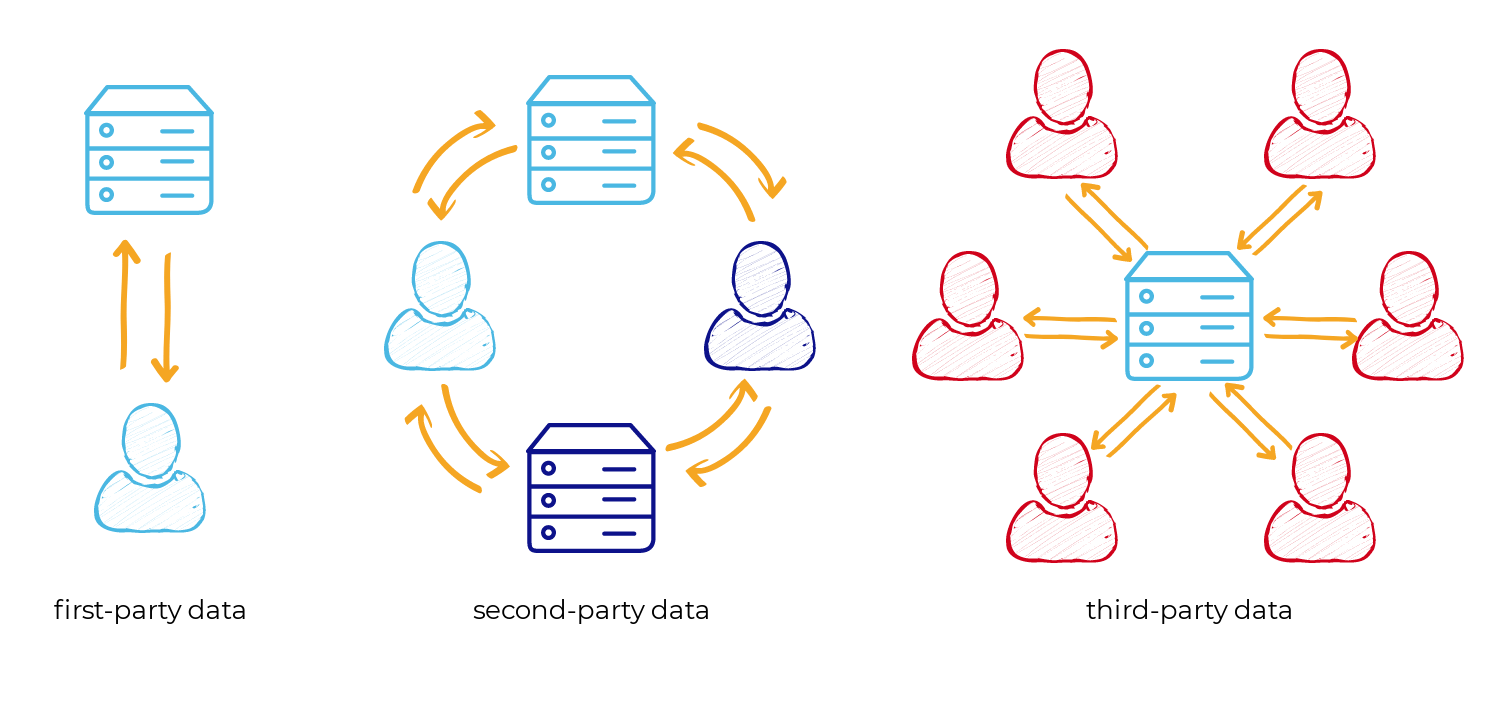
At its simplest, first-party data is the data you collect directly from your audience.
This includes:
- Website behavior
- Product usage data
- CRM records
- Email engagement
- Webinar and event participation
- Sales interactions
Unlike third-party data, this information is accurate, consent-based, and highly relevant to your business.
Why It Matters More in B2B Than B2C
B2B buying journeys are longer and more complex.
You are not selling a pair of shoes. You are dealing with:
- Multiple stakeholders
- Long decision cycles
- High-value contracts
- Deep research before purchase
This makes context critical. You need to understand not just who your buyer is, but where they are in the journey.
First-party data gives you that visibility.
What Is a First-Party Data Platform?
A first-party data platform is not just a tool. It is a system that collects, unifies, and activates your customer data across channels.
Think of it as the central nervous system of your go-to-market strategy.
It typically connects:
- Your CRM
- Marketing automation tools
- Website analytics
- Product data
- Customer support systems
The goal is simple: create a unified view of your buyer and make that data actionable.
The Real Role of First-Party Data Platforms in B2B Growth
Many companies treat data platforms as reporting tools. That is a mistake.
Their real role is to drive growth across three areas:
- Better targeting
- Smarter engagement
- Stronger conversion
Let’s break this down.
1. Turning Anonymous Traffic into Qualified Pipeline
Most B2B websites have a major blind spot.
You get traffic, but you do not know who most visitors are.
First-party data platforms help you:
- Track behavior across sessions
- Identify high-intent actions
- Connect anonymous activity to known accounts over time
Example
A SaaS company notices that multiple visitors from the same company:
- Visit pricing pages
- Download technical documentation
- Attend a webinar
Individually, these signals may seem weak. Combined, they indicate strong buying intent.
With the right setup, your team can:
- Alert sales
- Trigger targeted outreach
- Prioritize that account
This is how you move from leads to buying groups.
2. Aligning Sales and Marketing Around Real Buyer Signals
One of the biggest issues in B2B is misalignment between sales and marketing.
Marketing focuses on MQLs. Sales cares about revenue.
First-party data bridges this gap.
Instead of scoring leads based on arbitrary rules, you can:
- Use real engagement data
- Track account-level activity
- Share insights across teams
Practical Strategy
Create a shared view of:
- Account engagement score
- Content consumption patterns
- Product interest signals
This allows sales to approach conversations with context.
Not just “This lead downloaded an ebook”
But “This account is actively researching your solution category”
That is a completely different conversation.
3. Personalizing the Buyer Experience at Scale
Personalization in B2B often stops at using someone’s first name in an email.
That is not personalization. That is formatting.
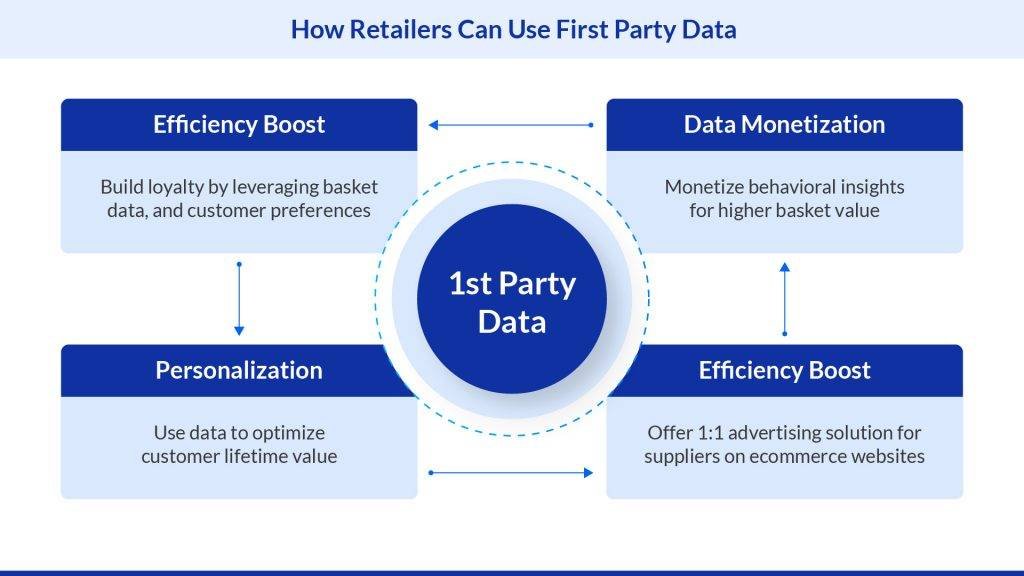
With first-party data, you can:
- Tailor website experiences
- Customize email journeys
- Serve relevant content based on behavior
Example
If a visitor:
- Works in DevOps
- Has engaged with security-related content
You can:
- Show relevant case studies
- Highlight specific product features
- Adjust messaging to match their priorities
This improves both engagement and conversion.
4. Improving Pipeline Quality, Not Just Volume
More leads do not always mean more revenue.
In fact, they often create more noise.
First-party data platforms help you focus on:
- High-intent accounts
- Relevant segments
- Qualified opportunities
Mini Case Scenario
A B2B analytics company reduced lead volume by 30 percent.
But they increased pipeline value by 45 percent.
How?
They stopped gating low-value content and instead:
- Tracked behavior across the buyer journey
- Focused on accounts showing consistent engagement
- Prioritized outreach accordingly
This is the shift from lead generation to demand intelligence.
5. Enabling Account-Based Marketing That Actually Works
Account-Based Marketing often fails because it lacks real data.
Teams select target accounts, but struggle to:
- Track engagement
- Measure impact
- Adjust strategy
First-party data changes that.
You can:
- Monitor account activity in real time
- Identify buying signals
- Trigger personalized campaigns
What This Looks Like in Practice
For a target account:
- Marketing runs tailored campaigns
- Website content adapts to the account profile
- Sales receives alerts on key actions
This creates a coordinated experience across touchpoints.
A Simple Framework to Get Started
You do not need a complex stack to begin.
Here is a practical 4-step framework.
Step 1: Audit Your Existing Data
Ask:
- Where is your data currently stored?
- What is usable?
- What is missing?
Focus on quality over quantity.
Step 2: Unify Your Data Sources
Start connecting:
- CRM
- Website analytics
- Marketing tools
Even basic integration can unlock insights.
Step 3: Define Key Signals
Not all data matters equally.
Identify:
- High-intent behaviors
- Key engagement milestones
- Buying triggers
Examples:
- Visiting pricing pages
- Attending product demos
- Repeated visits from the same account
Step 4: Activate the Data
This is where most companies fail.
Do something with the data:
- Trigger campaigns
- Alert sales
- Personalize experiences
Data without action is just storage.
Common Mistakes to Avoid
1. Overcomplicating the Stack
More tools do not equal better outcomes.
Start simple and build gradually.
2. Focusing Only on Collection
Collecting data is easy.
Using it effectively is the hard part.
3. Ignoring Sales Input
Sales teams have valuable insights.
Involve them in defining signals and priorities.
4. Treating All Leads Equally
Not all leads deserve the same attention.
Focus on intent and fit.
A Quick Checklist for B2B Teams
Use this to assess your readiness:
- Do you have a clear view of account-level engagement?
- Can sales access real-time buyer insights?
- Are you tracking behavior beyond form fills?
- Is your data connected across tools?
- Are you using data to trigger actions, not just reports?
If you answered no to more than two, there is room to improve.
A Contrarian Take: You Do Not Need Perfect Data
Many teams delay action because their data is incomplete.
That is a mistake.
Perfect data does not exist.
What matters is:
- Directional accuracy
- Consistent signals
- Continuous improvement
Start with what you have. Improve over time.
Waiting for perfection slows growth.
The Future of B2B Growth Is Owned Data
The shift toward first-party data is not a trend. It is a structural change.
As:
- Privacy regulations increase
- Third-party tracking declines
- Buyers demand better experiences
Companies that rely on external data will struggle.
Those that build strong first-party data systems will:
- Understand their buyers better
- Move faster
- Convert more efficiently
Conclusion: Build a System, Not Just Campaigns
B2B growth is no longer about isolated campaigns.
It is about building a system that:
- Captures meaningful data
- Connects insights across teams
- Drives coordinated action
First-party data sits at the center of that system.
If you want better pipeline, stronger alignment, and more predictable growth, this is where to focus.
Start small. Stay consistent. Act on what you learn.
That is how you turn data into a real competitive advantage.