B2B buying behavior has fundamentally changed. Today’s buyers expect to explore, test, and validate products on their own terms—before ever speaking to a salesperson. This shift has given rise to Product-Led Growth (PLG), a model where the product itself drives acquisition, activation, and expansion.
But here’s the catch: PLG alone isn’t enough for most B2B companies aiming for large deals and enterprise expansion. That’s where Sales-Led Growth (SLG) still shines.
The modern winning strategy? A hybrid approach that combines PLG with Sales-Led Growth.
Welcome to the new B2B playbook.
What is Product-Led Growth (PLG)?
Product-Led Growth is a go-to-market strategy where the product is the primary driver of customer acquisition and growth.
Key Characteristics:
- Free trials or freemium models
- Self-service onboarding
- Fast time-to-value
- Data-driven user insights
Benefits:
- Lower customer acquisition costs (CAC)
- Scalable growth engine
- Strong product-market fit validation
- User-driven expansion
PLG empowers users to experience value before committing—making it ideal for modern, digital-first buyers.
What is Sales-Led Growth (SLG)?
Sales-Led Growth relies on human interaction to acquire and expand customers. It’s particularly effective for:
- Complex products
- High-value deals
- Enterprise customers
- Custom implementations
Key Characteristics:
- Dedicated sales teams
- Personalized demos
- Negotiated contracts
- Relationship-driven selling
Benefits:
- Higher deal sizes
- Better handling of complex requirements
- Strong customer relationships
- Strategic account expansion
Why PLG Alone Isn’t Enough
While PLG is powerful, it has limitations:
- Struggles with enterprise complexity
- Limited ability to navigate multi-stakeholder deals
- Difficulty maximizing revenue from high-value accounts
Many companies hit a growth ceiling when relying solely on self-serve models.
Why Sales Alone Isn’t Enough
Traditional sales-led models face their own challenges:
- Longer sales cycles
- Higher acquisition costs
- Increasing buyer resistance to sales outreach
- Limited scalability
Modern buyers prefer to try before they buy, making pure SLG less effective than it once was.
The Rise of the Hybrid Model: PLG + SLG
The most successful B2B companies today combine both approaches into a unified strategy.
How It Works:
- PLG drives initial adoption
- Users sign up via free trials or freemium plans
- They explore the product independently
- Product data identifies high-intent users
- Usage patterns signal readiness to buy
- Behavioral analytics highlight expansion opportunities
- Sales steps in at the right moment
- Sales teams engage qualified leads
- Focus shifts to conversion, expansion, and enterprise deals
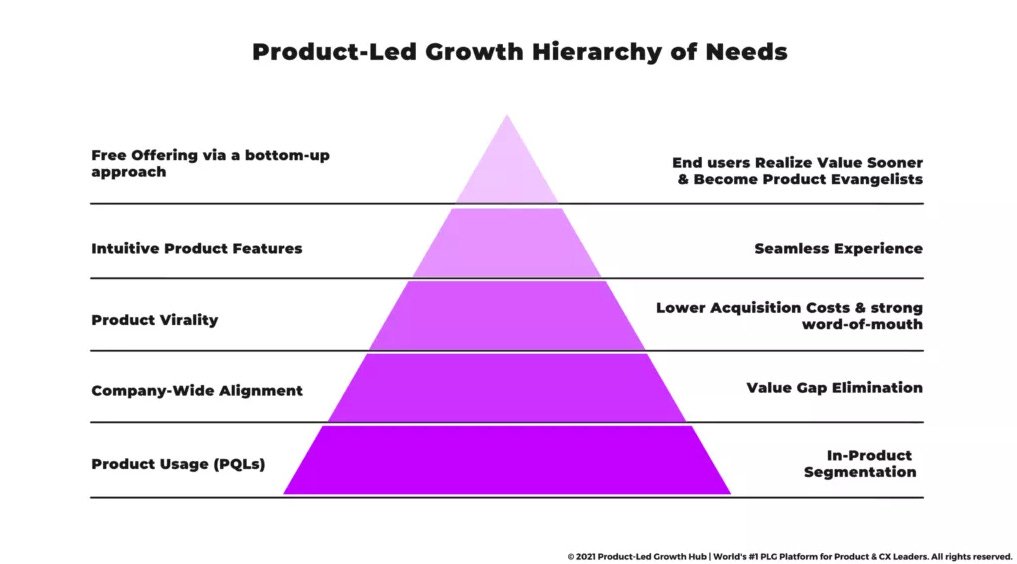
Key Components of a Hybrid Growth Strategy
1. Seamless Self-Serve Experience
Your product must deliver immediate value:
- Intuitive onboarding
- Clear activation milestones
- Minimal friction
2. Product-Qualified Leads (PQLs)
Move beyond traditional MQLs:
- Track user behavior inside the product
- Identify high-intent actions (e.g., feature usage, team invites)
- Route PQLs to sales teams
3. Tight Sales & Product Alignment
Sales teams should:
- Understand product usage data
- Use insights to personalize outreach
- Act as consultants, not just sellers
4. Usage-Based Expansion
Leverage:
- Upsells based on feature adoption
- Cross-sells driven by user needs
- Team and enterprise expansion triggers
5. Data-Driven Decision Making
Use analytics to:
- Optimize onboarding flows
- Identify drop-off points
- Improve conversion rates
Benefits of Combining PLG and SLG
🚀 Faster Growth
PLG fuels acquisition, while sales accelerates revenue from high-value accounts.
💰 Higher Revenue Per Customer
Sales teams unlock larger deals and expansions.
🎯 Better Customer Experience
Users explore independently, then receive support when needed.
📈 Improved Efficiency
Sales focuses only on qualified, high-intent leads.
Real-World Examples of Hybrid Growth
Many leading B2B companies have successfully adopted this model:
- Slack: Viral product adoption + enterprise sales expansion
- HubSpot: Freemium tools + strong inbound sales engine
- Zoom: Self-serve onboarding + enterprise deal-making
These companies demonstrate how PLG and SLG can work together seamlessly.
Common Challenges (and How to Overcome Them)
1. Misalignment Between Teams
Solution: Create shared metrics (PQLs, expansion revenue)
2. Poor Handoff Between Product and Sales
Solution: Define clear triggers for sales engagement
3. Overcomplicating the User Journey
Solution: Keep self-serve simple and intuitive
4. Lack of Data Visibility
Solution: Invest in product analytics and CRM integration
Building Your Hybrid Go-To-Market Strategy
Step 1: Start with PLG Foundations
- Offer free trials or freemium access
- Optimize onboarding
Step 2: Define PQL Criteria
- Identify behaviors that signal buying intent
Step 3: Enable Your Sales Team
- Train sales on product usage insights
- Align messaging with user behavior
Step 4: Integrate Tools and Data
- Connect product analytics with CRM
- Ensure real-time visibility
Step 5: Continuously Optimize
- Test, measure, and refine both PLG and sales motions
The Future of B2B Growth
The line between product and sales is disappearing. The future belongs to companies that:
- Let users experience value instantly
- Use data to guide engagement
- Combine automation with human expertise
In this new era, growth isn’t PLG or sales-led—it’s both.
Conclusion
The modern B2B landscape demands a smarter, more adaptive approach. By combining Product-Led Growth with Sales-Led Growth, companies can:
- Scale efficiently
- Close bigger deals
- Deliver better customer experiences
This hybrid model isn’t just a trend—it’s the new standard for sustainable B2B success.
Final Thoughts
If you’re still choosing between PLG and sales-led strategies, you’re asking the wrong question.
The real opportunity lies in integrating both into a cohesive, data-driven growth engine.
That’s the new B2B playbook—and it’s already redefining how the best companies win.