Table of Contents
- Why Great B2B Deals Stall Even When Demand Exists
- What Is Pipeline Acceleration?
- Why Traditional B2B Funnels Are Slowing Down
- The Biggest Myth About Pipeline Acceleration
- Strategy 1: Build Content for the Buying Committee, Not Just the Buyer
- Strategy 2: Reduce Time-to-Value in Your Messaging
- Strategy 3: Align Marketing and Sales Around Pipeline Stages
- Strategy 4: Stop Treating Enterprise Buyers Like Form Fills
- Strategy 5: Use Customer Proof Strategically, Not Randomly
- Strategy 6: Create Friction Audits for Your Sales Process
- Strategy 7: Turn Sales Conversations Into Scalable Content Insights
- Strategy 8: Prioritize Deal Quality Over Pipeline Volume
- Common Pipeline Acceleration Mistakes
- A Simple Pipeline Acceleration Framework
- Pipeline Acceleration Checklist
- The Future of Pipeline Acceleration in B2B Tech
- Conclusion
Why Great B2B Deals Stall Even When Demand Exists
Most B2B companies do not have a lead generation problem. They have a momentum problem.
The pipeline looks healthy in the CRM. Demo requests are coming in. Sales conversations are happening. Marketing dashboards show engagement across campaigns. Yet quarter after quarter, high-value deals move slower than expected or disappear entirely.
For founders, CMOs, and revenue leaders in tech companies, this creates a frustrating pattern. Revenue forecasts become unreliable. Customer acquisition costs rise. Sales teams blame lead quality while marketing teams point to weak follow-up. Meanwhile competitors with smaller budgets often close deals faster.
This is where pipeline acceleration becomes critical.
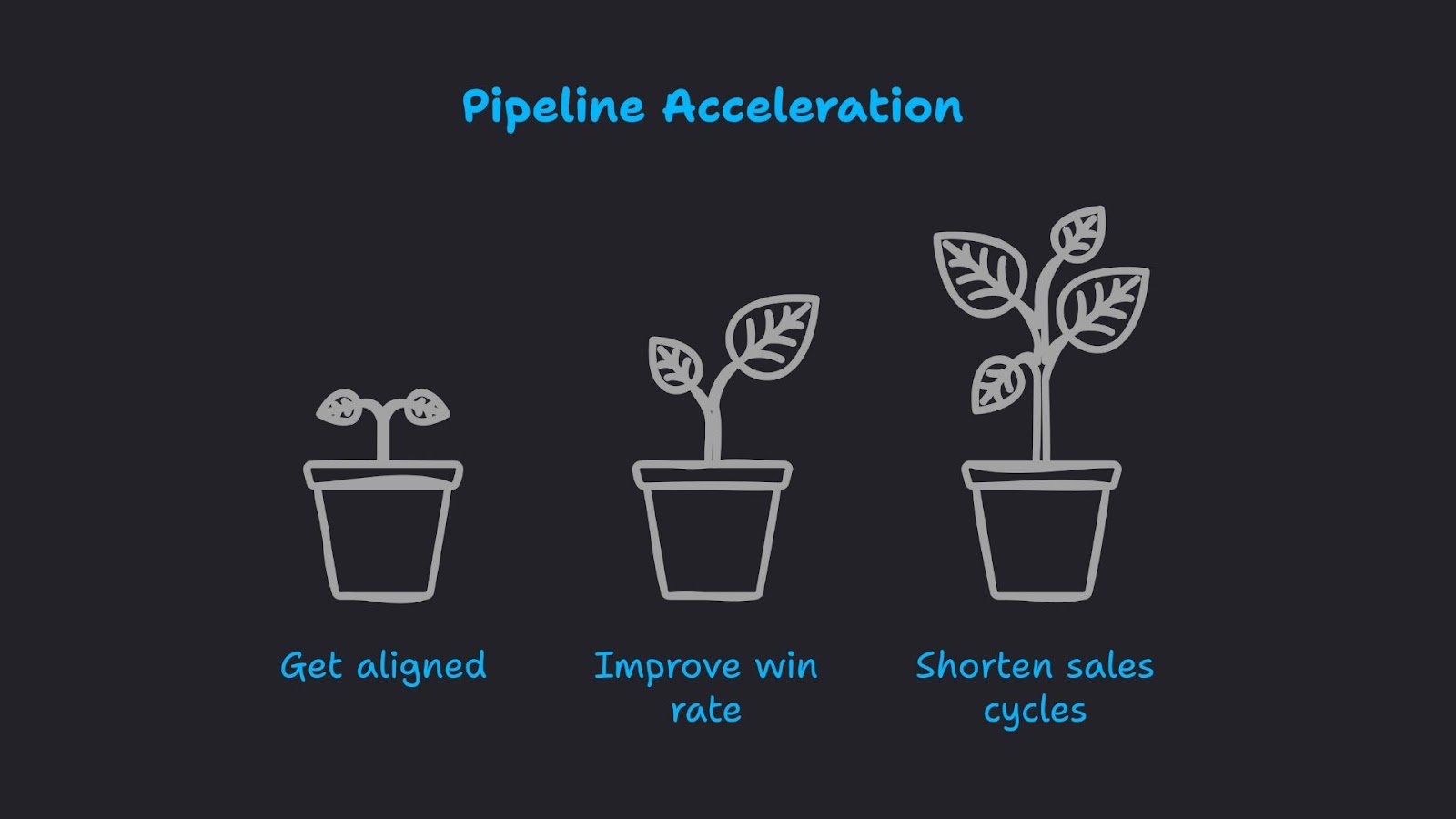
Pipeline acceleration is not about forcing buyers into rushed decisions. It is about removing friction, increasing buyer confidence, and helping the right prospects move forward faster with less resistance.
The companies that consistently win enterprise and mid-market deals are not always the ones with the biggest sales teams. They are the ones that understand how modern B2B buyers make decisions and build systems that support that process.
In this article, you will learn:
- What pipeline acceleration actually means in modern B2B sales
- Why traditional funnel thinking no longer works for high-value tech deals
- Practical pipeline acceleration strategies that reduce delays and improve conversion rates
- Common mistakes that silently slow enterprise deals
- A simple framework to align marketing and sales around deal velocity
If your company is trying to shorten sales cycles without sacrificing deal quality, these strategies will help.
What Is Pipeline Acceleration?
Pipeline acceleration refers to the strategies, systems, and content that help qualified B2B buyers move through the sales process faster and with greater confidence.
It focuses on reducing friction at every stage of the buying journey.
That friction could be:
- Internal stakeholder confusion
- Lack of trust
- Weak differentiation
- Slow follow-up
- Poor sales enablement
- Unclear ROI
- Generic messaging
- Delayed decision-making
In high-value B2B deals, buyers rarely make impulsive decisions. Most purchases involve multiple stakeholders, technical reviews, financial approvals, and risk assessments.
Pipeline acceleration works by making those decisions easier.
The important distinction is this:
Fast deals are not always good deals.
Accelerated deals are informed deals with fewer obstacles.
That difference matters.
Why Traditional B2B Funnels Are Slowing Down
Many B2B tech companies still operate with outdated funnel assumptions.
The old model looked like this:
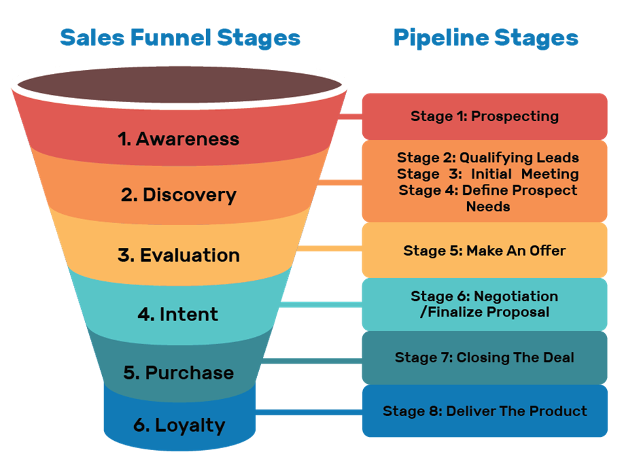
Awareness → Interest → Demo → Proposal → Close
In reality, modern buying journeys are far messier.
A prospect may:
- Read your content for six months before contacting sales
- Compare you against competitors before taking a demo
- Involve procurement late in the process
- Revisit technical concerns after pricing discussions
- Pause due to internal restructuring
The issue is not complexity alone. It is that most companies fail to support these nonlinear decision journeys.
As a result:
- Sales teams spend too much time repeating basic education
- Buyers struggle to justify decisions internally
- Marketing content stops after lead generation
- Decision momentum disappears between stages
Pipeline acceleration requires companies to think beyond lead acquisition and focus on deal progression.
That shift changes everything.
The Biggest Myth About Pipeline Acceleration
Many leaders assume pipeline acceleration means more automation.
It does not.
Automation can improve efficiency, but enterprise buyers do not move faster because they receive more emails.
They move faster when they feel:
- Confident
- Informed
- Understood
- Supported
- Certain about business outcomes
One of the biggest mistakes in B2B marketing is over-optimizing for volume while under-investing in decision support.
A company generating 500 low-intent MQLs per month may still lose to a competitor generating 100 highly aligned opportunities with stronger sales enablement.
Pipeline acceleration is ultimately about quality of movement, not quantity of leads.
Strategy 1: Build Content for the Buying Committee, Not Just the Buyer
Most B2B content targets one persona.
High-value deals involve many.
For enterprise and mid-market software purchases, the decision-making group often includes:
- Marketing leaders
- IT teams
- Finance stakeholders
- Procurement
- Operations leaders
- Security reviewers
- Executive leadership
One reason deals stall is because the internal champion lacks the tools to convince everyone else.
This is where pipeline acceleration becomes a content problem.
What Smart B2B Teams Do Differently
Instead of publishing only top-of-funnel blogs, they create:
ROI justification assets
Examples include:
- ROI calculators
- Cost comparison sheets
- Business case templates
- CFO-focused summaries
Technical validation content
Examples include:
- Security documentation
- Integration guides
- Architecture explainers
- Product implementation workflows
Internal alignment assets
Examples include:
- Stakeholder presentation decks
- One-page summaries
- Procurement FAQs
- Executive briefs
The goal is simple:
Help your champion sell internally.
Mini Case Example
A SaaS company selling workflow automation software noticed deals slowing after demos.
The issue was not product interest. Buyers struggled to explain implementation risks internally.
The company introduced:
- A 10-day onboarding roadmap
- Security review documentation
- Customer implementation videos
- Team training timelines
Result: sales cycles shortened because buyers could address concerns before they became blockers.
That is practical pipeline acceleration.
Strategy 2: Reduce Time-to-Value in Your Messaging
Many B2B companies position their products around features.
Buyers care more about outcomes.
Specifically, they care about how quickly they can see meaningful business impact.
One of the fastest ways to improve pipeline acceleration is to make value realization feel immediate and tangible.
Weak Messaging
“Our platform uses AI-powered workflow orchestration to improve operational visibility.”
Strong Messaging
“Most customers reduce manual reporting time within 30 days.”
The second version creates clarity.
It answers the unspoken buyer question:
“How soon will this help us?”
How to Improve Time-to-Value Messaging
Focus on:
- Early wins
- Fast onboarding
- Low implementation friction
- Measurable outcomes
- Customer proof points
Use phrases like:
- “Within the first 60 days”
- “Without replacing existing systems”
- “Using your current workflows”
- “With minimal engineering support”
This lowers perceived risk and accelerates decision-making.
Strategy 3: Align Marketing and Sales Around Pipeline Stages
One overlooked pipeline acceleration issue is stage misalignment.
Marketing celebrates lead generation while sales teams struggle to move opportunities forward.
This creates disconnected experiences for buyers.
Common Symptoms of Misalignment
- Marketing content stops after demo booking
- Sales teams create their own inconsistent materials
- Prospects receive repetitive messaging
- Buyer objections are not documented centrally
- CRM stages lack clear progression criteria
The best-performing B2B organizations treat pipeline acceleration as a shared revenue function.
A Practical Alignment Framework
Stage 1: Problem Recognition
Marketing responsibility:
Help buyers understand the cost of inaction.
Content examples:
- Industry reports
- Pain-point articles
- Benchmark studies
Stage 2: Solution Evaluation
Shared responsibility:
Support comparison and differentiation.
Content examples:
- Product walkthroughs
- Competitor comparisons
- Use-case guides
Stage 3: Internal Validation
Sales responsibility with marketing support:
Help buyers build internal consensus.
Content examples:
- ROI documents
- Security resources
- Executive summaries
Stage 4: Purchase Confidence
Joint responsibility:
Reduce final-stage hesitation.
Content examples:
- Customer stories
- Implementation plans
- Success metrics
When every stage has intentional support, deals move with less friction.
Strategy 4: Stop Treating Enterprise Buyers Like Form Fills
Many tech companies still gate high-value content behind aggressive lead capture forms.
This creates unnecessary resistance.
Enterprise buyers want confidence before conversation.
If your website forces prospects to “book a demo” before understanding your product deeply, you may actually slow pipeline acceleration.
A Contrarian Take
Sometimes the fastest way to increase pipeline velocity is to remove barriers, not add more conversion gates.
Modern buyers research independently.
They expect access to:
- Pricing guidance
- Product details
- Technical documentation
- Customer examples
- Use cases
Companies that hide everything behind sales conversations often create distrust.
What High-Performing B2B Brands Do
They create self-education ecosystems.
That includes:
- Detailed product pages
- Transparent onboarding expectations
- Extensive knowledge bases
- Video walkthroughs
- Interactive demos
The result is better-informed buyers entering sales conversations with stronger intent.
That accelerates pipelines naturally.
Strategy 5: Use Customer Proof Strategically, Not Randomly
Most companies use testimonials poorly.
Generic quotes like “Great platform and amazing support” do little to accelerate enterprise decisions.
High-value B2B buyers want evidence tied to business outcomes.
Better Customer Proof
Instead of generic praise, focus on:
- Revenue impact
- Operational improvements
- Time savings
- Risk reduction
- Implementation speed
Weak Testimonial
“The team was fantastic to work with.”
Strong Testimonial
“We reduced onboarding time from 21 days to 6 days across three departments.”
The second statement supports buyer confidence.
Match Proof to Pipeline Stage
Early-stage proof
Focus on:
- Market credibility
- Brand trust
- Industry relevance
Mid-stage proof
Focus on:
- Operational outcomes
- Use-case alignment
- Adoption success
Late-stage proof
Focus on:
- ROI
- Scalability
- Long-term business impact
Strategic proof is one of the most underutilized pipeline acceleration tactics in B2B marketing.
Strategy 6: Create Friction Audits for Your Sales Process
Most companies optimize campaigns but rarely audit buyer friction.
That is a mistake.
Sometimes pipeline acceleration has nothing to do with messaging and everything to do with process complexity.
Questions to Ask
- How long does demo scheduling take?
- Are proposals easy to understand?
- How many meetings happen before pricing discussion?
- Do buyers receive conflicting information?
- Is implementation explained clearly?
- How many approval steps exist internally?
Small friction points compound across enterprise deals.
Common Friction Examples
Slow response times
A high-intent lead waits four days for follow-up.
Momentum disappears.
Overcomplicated demos
The sales team shows every feature instead of focusing on buyer priorities.
Decision fatigue increases.
Unclear pricing
Buyers cannot estimate costs early enough to build internal support.
Deals stall.
Quick Pipeline Acceleration Wins
- Reduce unnecessary calls
- Create standardized proposal templates
- Offer role-specific demos
- Simplify onboarding explanations
- Improve handoffs between SDRs and AEs
Operational simplicity creates buying momentum.
Strategy 7: Turn Sales Conversations Into Scalable Content Insights
Sales calls contain some of the best pipeline acceleration insights in your business.
Yet most marketing teams rarely analyze them systematically.
That creates a disconnect between buyer reality and marketing assumptions.
What You Should Extract From Sales Calls
- Common objections
- Buying triggers
- Competitive concerns
- Stakeholder fears
- ROI expectations
- Procurement delays
This information should shape:
- Blog content
- Case studies
- Landing pages
- Email campaigns
- Sales enablement assets
Example
If buyers repeatedly ask:
“How difficult is migration?”
Then your content strategy should include:
- Migration walkthroughs
- Implementation timelines
- Customer migration stories
- Risk mitigation guides
The companies with the strongest pipeline acceleration systems listen closely to real buyer conversations.
Strategy 8: Prioritize Deal Quality Over Pipeline Volume
Many B2B companies quietly damage pipeline velocity by chasing lead volume targets.
This creates bloated pipelines filled with low-intent opportunities.
Sales teams become distracted. Forecasting becomes unreliable. High-fit deals receive less attention.
Pipeline acceleration improves dramatically when companies focus on ideal customer alignment.
Strong Qualification Matters
Not every lead deserves equal effort.
Focus on prospects with:
- Clear business pain
- Active buying intent
- Internal urgency
- Budget alignment
- Executive sponsorship
A smaller, healthier pipeline often converts faster than a massive one.
Contrarian Insight
More pipeline is not always better.
Better pipeline is better.
That distinction changes how marketing budgets should be allocated.
Common Pipeline Acceleration Mistakes
Mistake 1: Treating Marketing as Lead Generation Only
Marketing should support the full revenue journey, not just top-of-funnel acquisition.
Mistake 2: Overcomplicating Buyer Education
Complex messaging slows decisions.
Clarity accelerates trust.
Mistake 3: Ignoring Internal Stakeholders
Your buyer is rarely buying alone.
Support the entire decision group.
Mistake 4: Focusing Only on New Leads
Sometimes the biggest pipeline acceleration opportunities already exist in your CRM.
Re-engagement campaigns can revive stalled opportunities effectively.
Mistake 5: Hiding Pricing Completely
Enterprise buyers understand custom pricing exists.
But zero pricing context creates uncertainty.
Even broad pricing guidance helps.
A Simple Pipeline Acceleration Framework
Here is a practical framework B2B tech companies can implement immediately.
Step 1: Identify Friction Points
Review stalled deals from the last six months.
Look for patterns:
- Security concerns
- Pricing confusion
- Slow onboarding fears
- Executive buy-in issues
Step 2: Create Stage-Specific Assets
Build content designed for each buying stage.
Avoid generic collateral.
Step 3: Improve Sales and Marketing Feedback Loops
Hold regular reviews around:
- Objections
- Lost deals
- Competitive threats
- Buyer hesitation patterns
Step 4: Shorten Time-to-Confidence
Buyers move faster when uncertainty decreases.
Prioritize:
- Clarity
- Transparency
- Proof
- Simplicity
Step 5: Measure Velocity Metrics
Track:
- Time between stages
- Deal stagnation points
- Sales cycle length
- Conversion rates by segment
Pipeline acceleration becomes measurable when velocity data is visible.
Pipeline Acceleration Checklist
Use this quick checklist to evaluate your current process.
Buyer Education
- Do prospects understand your value quickly?
- Is implementation clearly explained?
- Do you provide role-specific content?
Sales Enablement
- Are proposals easy to understand?
- Does sales have updated case studies?
- Are objections documented centrally?
Buyer Confidence
- Is ROI clearly communicated?
- Are customer outcomes specific?
- Do buyers understand onboarding timelines?
Process Efficiency
- Is demo scheduling fast?
- Are follow-ups timely?
- Are pricing discussions delayed unnecessarily?
Even improving a few of these areas can meaningfully improve pipeline acceleration.
The Future of Pipeline Acceleration in B2B Tech
The next era of B2B growth will belong to companies that reduce buying complexity.
Not companies that simply generate more leads.
AI tools, automation platforms, and analytics software are making information easier to access. That means competitive advantage increasingly comes from buyer experience and decision clarity.
The winners will be companies that:
- Simplify enterprise buying
- Build trust earlier
- Support internal stakeholder alignment
- Deliver value quickly
- Reduce friction consistently
Pipeline acceleration is ultimately about making decisions easier for buyers.
That requires empathy as much as execution.
Conclusion
High-value B2B deals rarely stall because buyers lack interest.
They stall because uncertainty, friction, and internal complexity slow momentum.
Effective pipeline acceleration helps buyers move forward with confidence by improving clarity, reducing obstacles, and aligning marketing with real sales conversations.
The most successful B2B tech companies are shifting away from outdated funnel thinking and focusing instead on deal progression, stakeholder enablement, and measurable buyer outcomes.
If you want faster sales cycles, stronger conversion rates, and healthier revenue growth, start by asking a different question.
Not “How do we generate more leads?”
But:
“How do we make buying easier for the right customers?”
That is where sustainable pipeline acceleration begins.