The Rise of Autonomous CRM Systems in B2B Sales: How AI Agents Are Transforming Revenue Operations in 2026
Introduction
For more than two decades, Customer Relationship Management (CRM) platforms have served as digital databases for sales organizations. Companies invested millions in CRM systems to track leads, manage customer interactions, monitor pipelines, and forecast revenue.
However, a fundamental shift is underway.
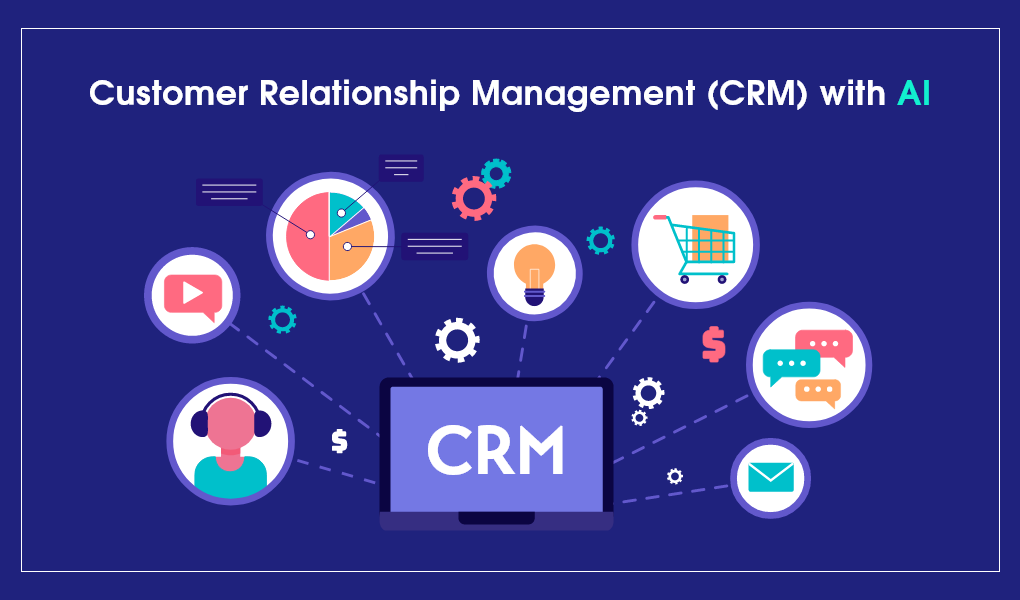
In 2026, CRM platforms are no longer merely systems of record. They are evolving into autonomous systems of action powered by AI agents capable of researching prospects, qualifying leads, drafting outreach campaigns, scheduling meetings, updating pipelines, identifying deal risks, and recommending next-best actions with minimal human intervention. Organizations are increasingly adopting autonomous CRM systems to improve efficiency, accelerate revenue growth, and reduce administrative burden on sales teams.
This transformation is redefining how B2B sales organizations operate.
In this article, we’ll explore what autonomous CRM systems are, why they are gaining traction, key technologies driving their growth, major platform innovations in 2026, benefits, challenges, and what the future holds for AI-driven sales organizations.
What Is an Autonomous CRM System?
An autonomous CRM system goes beyond traditional automation.
Conventional CRM automation relies on predefined workflows:
- If a lead fills out a form, send an email.
- If a deal reaches a certain stage, notify a manager.
- If a customer submits a ticket, assign it to a representative.
Autonomous CRM systems operate differently.
Using agentic AI, large language models (LLMs), machine learning, reasoning engines, and enterprise data integration, these systems can:
- Analyze customer behavior
- Research target accounts
- Generate personalized outreach
- Prioritize opportunities
- Predict deal outcomes
- Execute sales workflows
- Update records automatically
- Collaborate with human sales teams
Instead of waiting for instructions, autonomous CRM systems proactively identify opportunities and take action.
This represents the shift from CRM as a database to CRM as a digital sales teammate.
Why Traditional CRM Systems Are No Longer Enough
Sales representatives spend a significant portion of their time on non-selling activities.
These activities include:
- Updating CRM records
- Writing follow-up emails
- Researching prospects
- Scheduling meetings
- Preparing call notes
- Generating reports
Despite billions invested in CRM software, data quality remains a persistent challenge.
Many organizations struggle with:
- Incomplete records
- Outdated contact information
- Poor pipeline visibility
- Inaccurate forecasting
- Low CRM adoption rates
Autonomous CRM systems address these issues by continuously enriching data, maintaining records, and executing repetitive tasks automatically. This enables sales professionals to focus on relationship-building and strategic selling rather than administrative work.
The Evolution from CRM Automation to Agentic CRM
The CRM industry’s AI journey can be viewed in four stages:
Stage 1: Record Keeping (2000–2015)
CRM platforms primarily served as digital filing cabinets.
Features included:
- Contact management
- Opportunity tracking
- Activity logging
- Basic reporting
Human input was required for nearly every action.
Stage 2: Workflow Automation (2015–2022)
CRM vendors introduced:
- Automated workflows
- Trigger-based actions
- Marketing automation
- Lead scoring
While productivity improved, systems still depended heavily on predefined rules.
Stage 3: AI Copilots (2023–2024)
The rise of generative AI introduced:
- Email drafting
- Conversation summaries
- Sales recommendations
- Predictive analytics
AI became an assistant rather than a workflow engine.
Stage 4: Autonomous CRM (2025–2026)
The current phase is characterized by:
- AI agents
- Multi-agent workflows
- Autonomous execution
- Context-aware decision-making
- Continuous optimization
Today’s AI agents can independently perform complex sales tasks while collaborating with humans when needed.
Key Technologies Powering Autonomous CRM Systems
1. Agentic AI
Agentic AI refers to systems capable of planning, reasoning, and executing tasks autonomously.
Unlike traditional chatbots, AI agents can:
- Set goals
- Break down tasks
- Access tools
- Execute actions
- Monitor outcomes
Agentic AI is the foundation of modern autonomous CRM platforms.
2. Large Language Models (LLMs)
Advanced language models enable CRM systems to:
- Understand customer conversations
- Generate personalized communication
- Summarize meetings
- Analyze sentiment
- Produce sales insights
LLMs have become increasingly specialized for enterprise sales environments.
3. Context Engineering
One of the most important trends in 2026 is context engineering.
Modern AI agents use contextual information from:
- CRM records
- Emails
- Meetings
- Call transcripts
- Marketing interactions
- Product usage data
This allows AI agents to make more accurate decisions and recommendations.
4. Unified Customer Data Platforms
Autonomous systems require high-quality data.
Organizations are investing heavily in:
- Customer data platforms (CDPs)
- Data clouds
- Real-time data synchronization
- Identity resolution
Unified customer profiles help AI agents operate with greater accuracy.
5. Real-Time Intelligence
Modern CRM systems now provide:
- Live deal monitoring
- Risk detection
- Sales coaching
- Dynamic forecasting
Research published in 2026 demonstrated that AI-powered sales copilots can retrieve relevant information in seconds during live conversations, significantly reducing the time representatives spend searching for answers.

Major Autonomous CRM Platforms Leading the Market in 2026
Salesforce Agentforce
Salesforce remains one of the most influential players in autonomous CRM.
Its Agentforce ecosystem includes AI agents for:
- Prospecting
- Pipeline management
- Meeting preparation
- Quoting
- Partner management
- Customer support
Salesforce has doubled down on its AI strategy throughout 2025 and 2026, reporting substantial growth in Agentforce adoption and AI-driven revenue. The company’s recent acquisition of Fin further strengthens its autonomous customer engagement capabilities.
Key strengths:
- Deep enterprise integration
- Extensive ecosystem
- Strong governance controls
- Advanced reasoning capabilities
Microsoft Dynamics 365 Copilot
Microsoft’s approach centers on integrating AI agents across:
- CRM
- ERP
- Productivity tools
- Collaboration platforms
Dynamics 365 leverages data from Outlook, Teams, SharePoint, and customer records to create highly contextual sales experiences. Microsoft’s 2026 release wave introduces expanded agentic capabilities across sales, service, finance, and operations.
Key strengths:
- Cross-platform intelligence
- Enterprise-scale deployment
- Deep Microsoft ecosystem integration
HubSpot Breeze
HubSpot has rapidly evolved from a marketing-centric platform into a fully AI-enabled CRM.
Breeze agents can:
- Capture leads
- Enrich records
- Draft campaigns
- Assist sales teams
- Automate customer engagement
HubSpot’s AI-first strategy has made autonomous CRM capabilities more accessible to mid-market businesses.
Zoho Zia
Zoho continues to expand its Zia AI ecosystem, offering autonomous workflows and intelligent automation for small and medium-sized businesses.
The platform’s affordability makes it attractive for organizations seeking AI-driven CRM capabilities without enterprise-level costs.
Benefits of Autonomous CRM Systems in B2B Sales
Increased Sales Productivity
One of the biggest advantages is reducing administrative work.
Sales representatives spend less time on:
- Data entry
- Reporting
- Scheduling
- Research
And more time on:
- Relationship building
- Negotiation
- Strategic selling
Better Lead Qualification
AI agents can analyze:
- Intent signals
- Firmographic data
- Engagement history
- Buying behavior
This helps prioritize high-value opportunities more effectively.
Faster Sales Cycles
Autonomous systems reduce delays by:
- Automatically following up
- Scheduling meetings
- Delivering insights
- Identifying bottlenecks
This accelerates movement through the sales funnel.
Improved Forecast Accuracy
AI agents continuously monitor:
- Deal progression
- Buyer engagement
- Historical patterns
This results in more accurate revenue forecasting.
Enhanced Personalization
Modern buyers expect personalized experiences.
Autonomous CRM systems generate highly customized:
- Emails
- Meeting briefs
- Outreach sequences
- Recommendations
At scale.
Challenges and Risks
Despite the benefits, autonomous CRM adoption comes with challenges.
Data Quality Issues
AI systems are only as effective as the data they access.
Poor-quality CRM data can lead to:
- Inaccurate recommendations
- Misguided outreach
- Faulty predictions
Governance and Compliance
Organizations must ensure:
- Data privacy
- Regulatory compliance
- Auditability
- Security controls
Governance remains a top concern, particularly in highly regulated industries.
Human Oversight Requirements
Most organizations are not ready for fully autonomous sales operations.
Human supervision remains essential for:
- Strategic decisions
- Contract negotiations
- Relationship management
- Compliance-sensitive interactions
Industry experts consistently emphasize that AI should augment human judgment rather than replace it.
Reliability Concerns
Research into enterprise AI agents shows that real-world business workflows remain challenging, with significant differences in performance across systems. Reliable execution continues to be a major focus area for vendors.
Emerging Trends Shaping Autonomous CRM in 2026
Multi-Agent Sales Teams
Organizations are deploying multiple specialized agents:
- Prospecting agents
- Research agents
- Forecasting agents
- Customer success agents
These agents collaborate to execute complex revenue workflows.
Autonomous Account Research
AI agents can now perform deep account analysis, identifying:
- Buying committees
- Expansion opportunities
- Competitive threats
- Market signals
This dramatically reduces manual research requirements.
Headless CRM Access
A growing trend is “headless CRM.”
Instead of users logging into CRM interfaces, AI agents access CRM data directly and deliver insights through communication tools such as email, chat, and collaboration platforms.
Real-Time Revenue Intelligence
Sales teams increasingly rely on AI-generated:
- Deal health scores
- Pipeline risk alerts
- Competitive intelligence
- Buying intent analysis
These capabilities transform CRM systems into proactive decision-making platforms.
Agent Governance Platforms
As AI autonomy increases, organizations are investing in:
- Agent monitoring
- Audit trails
- Approval workflows
- Risk controls
Governance will become a defining factor in enterprise AI adoption.
The Future of Autonomous CRM Systems
Looking ahead, autonomous CRM systems are expected to become the operational backbone of modern revenue organizations.
Over the next few years, we are likely to see:
- Fully autonomous lead nurturing
- AI-managed sales pipelines
- Cross-functional AI agents spanning sales, marketing, and customer success
- Self-optimizing revenue operations
- Real-time enterprise decision-making systems
Rather than replacing sales professionals, autonomous CRM systems will redefine their roles.
Sales representatives will increasingly focus on:
- Relationship development
- Strategic consulting
- Complex negotiations
- Executive engagement
Meanwhile, AI agents will handle repetitive operational tasks behind the scenes.
The future belongs to organizations that successfully combine human expertise with autonomous intelligence.
Conclusion
The rise of autonomous CRM systems marks one of the most significant transformations in the history of B2B sales.
Driven by advances in agentic AI, large language models, unified customer data, and enterprise automation, CRM platforms are evolving from passive databases into intelligent systems capable of taking meaningful action.
In 2026, market leaders such as Salesforce, Microsoft, HubSpot, and Zoho are investing heavily in autonomous capabilities that enable sales organizations to improve productivity, accelerate growth, and deliver more personalized customer experiences.
While challenges around governance, data quality, and trust remain, the momentum behind autonomous CRM adoption is undeniable.
For B2B organizations seeking competitive advantage, the question is no longer whether autonomous CRM systems will become mainstream—but how quickly they can adapt to this new era of AI-driven revenue operations.