For years, B2B companies treated the sales process as the finish line. Once the contract was signed, the focus shifted to onboarding, support, and delivering the promised solution. Expansion opportunities—upsells, cross-sells, and renewals—were often considered the responsibility of account managers months later.
That approach no longer works.
Today’s B2B buyers expect more than a successful purchase. They expect an exceptional experience after the sale. Every interaction, from onboarding to customer support and proactive account management, influences whether a customer increases their investment or begins looking for alternatives.
In today’s subscription-driven economy, customer lifetime value matters more than one-time revenue. Winning a client is only the beginning. The real growth comes from retaining them, helping them achieve measurable success, and earning their trust to expand the partnership.
At TechB2BShoot, we’ve seen a clear shift in buyer behavior. Companies that prioritize post-sale experiences consistently outperform competitors in customer retention, account expansion, and long-term profitability.
Let’s explore why post-sale experience has become one of the biggest drivers of B2B deal expansion—and how your business can leverage it for sustainable growth.
Understanding Post-Sale Experience
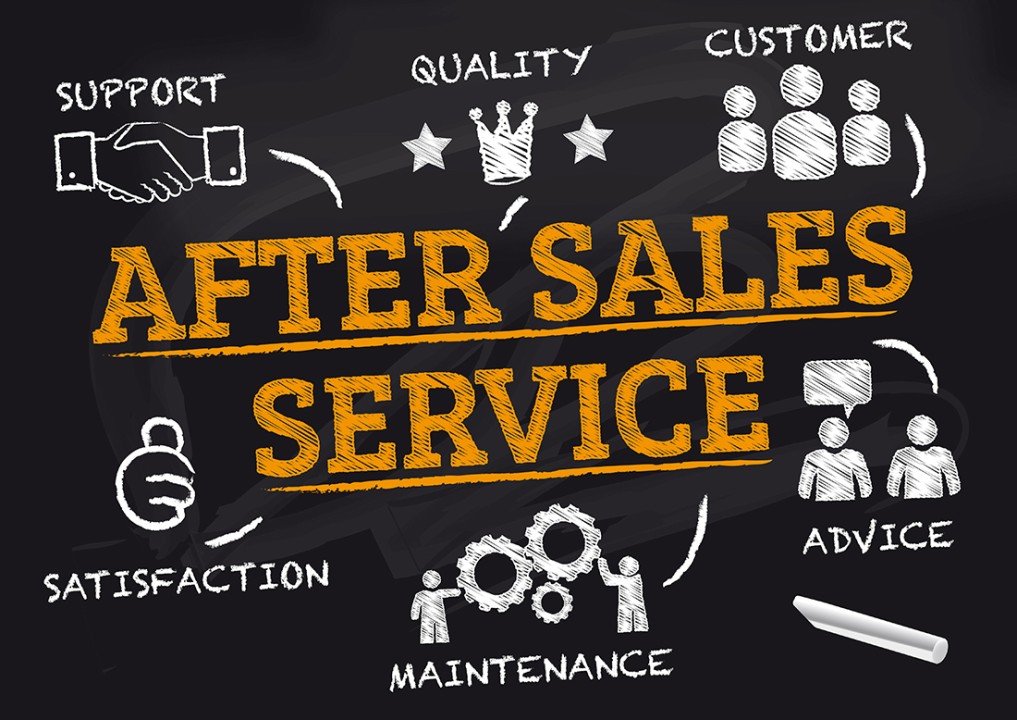
Post-sale experience refers to everything a customer encounters after signing the contract.
It includes:
- Customer onboarding
- Product implementation
- Training sessions
- Customer support
- Technical assistance
- Account management
- Product updates
- Regular business reviews
- Customer success initiatives
- Renewal discussions
- Upsell conversations
Many organizations mistakenly believe these are operational activities.
In reality, they are revenue-generating activities.
Every interaction shapes customer perception. Every positive outcome builds confidence. Every solved problem creates trust.
Trust eventually becomes expansion revenue.
Why Expansion Revenue Matters More Than Ever
Customer acquisition has become significantly more expensive.
Marketing costs continue to rise.
Sales cycles have become longer.
Decision-makers involve more stakeholders.
Competition is increasing across nearly every industry.
As acquisition becomes more difficult, businesses naturally focus on maximizing existing customer relationships.
Expansion revenue generally comes from:
- Product upgrades
- Additional licenses
- Premium support
- New feature adoption
- Multi-year contracts
- Cross-selling complementary services
- Department-wide rollouts
- Global implementations
Existing customers already understand your brand.
They’ve already experienced your product.
The biggest deciding factor isn’t your sales presentation anymore.
It’s the experience they’ve had since becoming your customer.
The Shift from Customer Support to Customer Success
Traditional support was reactive.
Customers raised tickets.
Support teams solved problems.
The interaction ended.
Modern customer success is proactive.
Instead of waiting for issues, successful companies actively help customers achieve better outcomes.
Examples include:
- Regular performance reviews
- Adoption tracking
- Usage recommendations
- ROI reporting
- Strategic consulting
- Training sessions
- Best practice sharing
When customers consistently achieve results, expansion conversations become much easier.
Customers don’t feel sold to.
Instead, they naturally want more.
Customer Trust Drives Bigger Deals
Trust isn’t built during negotiations.
It’s built afterward.
Imagine two vendors.
Vendor A disappears after implementation.
Support responses take days.
No one checks in.
Training is minimal.
Issues remain unresolved.
Vendor B schedules regular strategy meetings.
Shares optimization recommendations.
Responds quickly.
Introduces new features.
Provides measurable ROI reports.
Which vendor is more likely to receive a larger contract next year?
The answer is obvious.
Expansion is rarely driven by aggressive sales tactics.
It’s driven by confidence.
Buyers Want Business Outcomes, Not Products
Modern B2B buyers aren’t purchasing software, services, or technology.
They’re purchasing outcomes.
Examples include:
- Higher productivity
- Increased revenue
- Reduced operational costs
- Better customer experience
- Improved efficiency
- Faster workflows
- Better reporting
- Competitive advantage
If your post-sale team helps customers reach those outcomes, expansion becomes a logical next step.
Customers rarely hesitate to invest more in something that’s already delivering measurable business value.
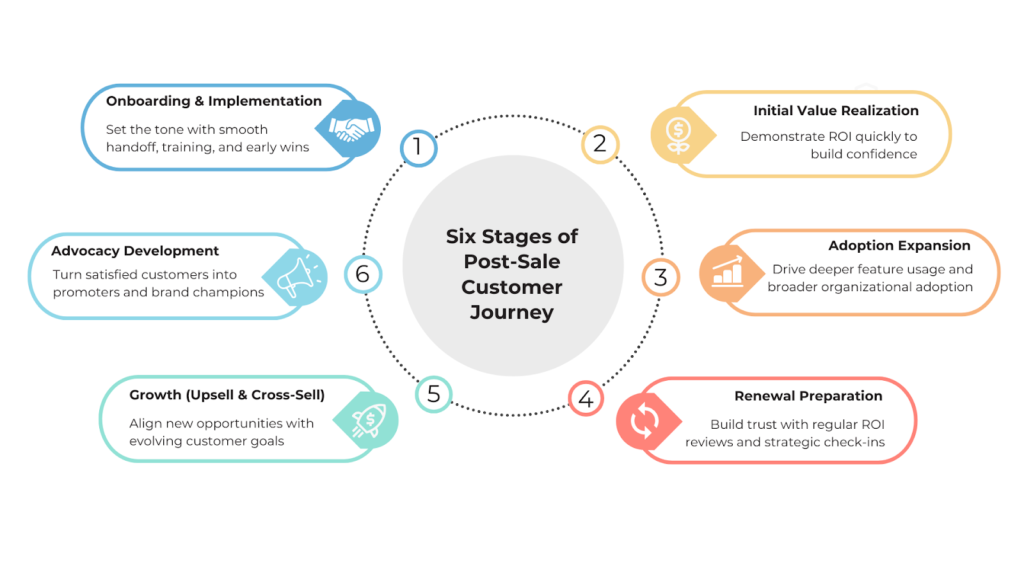
Onboarding Sets the Tone for Long-Term Growth
The first few weeks after purchase are critical.
Poor onboarding creates confusion.
Confused customers use products less.
Lower usage leads to lower value.
Lower value reduces renewal probability.
Strong onboarding creates momentum.
Customers quickly experience success.
They adopt more features.
They involve more users.
They recommend the solution internally.
Expansion often begins during onboarding.
Product Adoption Predicts Expansion
Companies frequently assume customers understand every feature.
They don’t.
Many businesses use only a small percentage of available functionality.
That means enormous expansion potential already exists inside existing accounts.
Successful customer success teams monitor:
- Login frequency
- Feature adoption
- User engagement
- Team participation
- Workflow completion
- ROI metrics
When adoption increases, expansion usually follows.
Executive Business Reviews Create Strategic Relationships
Quarterly Business Reviews (QBRs) have evolved beyond simple performance updates.
Modern reviews focus on strategic growth.
Topics include:
- Business goals
- Success metrics
- ROI achieved
- New opportunities
- Future initiatives
- Industry trends
- Product roadmap
These conversations elevate the relationship from vendor to strategic partner.
Strategic partners receive larger budgets.
Customer Education Creates Expansion Opportunities
Many companies underestimate the power of education.
Webinars.
Training.
Certification programs.
Knowledge bases.
Workshops.
Video tutorials.
Community forums.
Every educational resource increases customer confidence.
Confident customers explore more features.
More features create more value.
More value leads to expansion.
Support Quality Influences Buying Decisions
Customer support is often viewed as a cost center.
It’s actually a growth driver.
Fast response times.
Helpful agents.
Technical expertise.
Empathy.
Clear communication.
Consistent follow-up.
These qualities create memorable customer experiences.
When renewal discussions begin, customers remember every interaction.
Good support becomes a competitive advantage.
Data Helps Predict Expansion
Modern customer success teams rely heavily on analytics.
Key indicators include:
- Product usage
- Adoption rates
- Customer health scores
- Satisfaction scores
- Net Promoter Score (NPS)
- Feature requests
- Support tickets
- Business outcomes
This data helps identify accounts ready for expansion.
Instead of guessing, businesses make data-driven recommendations.
Personalized Experiences Increase Customer Loyalty
Generic communication no longer works.
Customers expect personalized engagement.
Examples include:
- Industry-specific recommendations
- Role-based training
- Customized reporting
- Tailored onboarding
- Personalized business reviews
- Targeted feature suggestions
Personalization demonstrates genuine investment in customer success.
That investment often results in stronger partnerships.
Customer Advocacy Accelerates Expansion
Satisfied customers become advocates.
Advocates:
- Recommend new departments
- Introduce decision-makers
- Participate in case studies
- Join webinars
- Provide testimonials
- Refer new clients
Internal advocacy often leads to company-wide expansion.
One successful department becomes ten.
Cross-Functional Collaboration Improves Customer Outcomes
Expansion isn’t owned solely by sales.
It requires collaboration across:
- Sales
- Marketing
- Customer Success
- Product
- Engineering
- Support
- Leadership
When every team shares customer insights, organizations create better experiences.
Better experiences generate stronger customer relationships.
The Cost of Ignoring Post-Sale Experience
Poor post-sale engagement creates several risks:
Low Product Adoption
Customers fail to realize the product’s full value.
Higher Churn
Unsatisfied customers leave.
Negative Reviews
Poor experiences spread quickly.
Missed Upsell Opportunities
Customers don’t discover additional solutions.
Reduced Lifetime Value
Revenue potential remains unrealized.
Ignoring post-sale experiences doesn’t simply reduce customer satisfaction.
It directly impacts profitability.
Practical Ways to Improve Post-Sale Experience
Businesses can strengthen post-sale engagement by implementing several best practices.
Build a Structured Onboarding Program
Don’t leave onboarding to chance.
Develop standardized implementation plans with clear milestones.
Assign Dedicated Customer Success Managers
Customers appreciate having a consistent point of contact.
Measure Customer Health
Track usage, satisfaction, adoption, and engagement regularly.
Communicate Proactively
Don’t wait for problems.
Schedule regular check-ins.
Invest in Education
Offer webinars, certifications, and self-service resources.
Collect Feedback Frequently
Customer feedback highlights opportunities for continuous improvement.
Celebrate Customer Success
Recognize milestones, achievements, and measurable business outcomes.
Success stories strengthen relationships.
The Role of Technology in Post-Sale Success
Technology enables scalable customer success.
Modern organizations use:
- CRM platforms
- Customer Success software
- Product analytics
- AI-driven insights
- Marketing automation
- Customer portals
- Knowledge management systems
These tools help teams identify opportunities before customers even ask.
Predictive insights make proactive engagement possible.
How TechB2BShoot Helps Businesses Improve Deal Expansion
At TechB2BShoot, we believe sustainable B2B growth begins after the contract is signed.
Our approach focuses on helping organizations create customer experiences that encourage long-term partnerships rather than one-time transactions.
We help businesses:
- Develop customer-centric growth strategies
- Improve customer engagement across the entire lifecycle
- Create scalable onboarding processes
- Enhance customer communication
- Strengthen retention initiatives
- Identify expansion opportunities through customer insights
- Build trust through value-driven engagement
Instead of relying solely on new customer acquisition, we help businesses unlock growth from their existing customer base.
The result is stronger customer relationships, increased renewals, and higher expansion revenue.
The Future of B2B Growth Is Customer-Led
The traditional sales funnel is evolving into a customer lifecycle model.
Winning the deal is only the first milestone.
Real business growth comes from continuously delivering value after the sale.
Organizations that invest in customer success, personalized experiences, proactive support, and measurable outcomes will consistently outperform those that focus only on acquisition.
As buyer expectations continue to rise, post-sale experience will become one of the strongest competitive advantages in the B2B market.
Companies that understand this shift won’t just retain customers—they’ll transform them into loyal advocates, long-term partners, and powerful growth engines.
If your goal is to increase expansion rates, improve customer lifetime value, and create sustainable revenue growth, it’s time to rethink what happens after the sale.
Because in modern B2B business, the customer journey doesn’t end with a signed contract.
That’s where the real opportunity begins.